Developer Transforms Downtown DC Office Buildings as Market Shifts
As traditional office demand crumbles nationwide, Meridian Properties' renovation strategy is proving there's life in older buildings—and profit in adaptation.
As traditional office demand crumbles nationwide, Meridian Properties' renovation strategy is proving there's life in older buildings—and profit in adaptation.
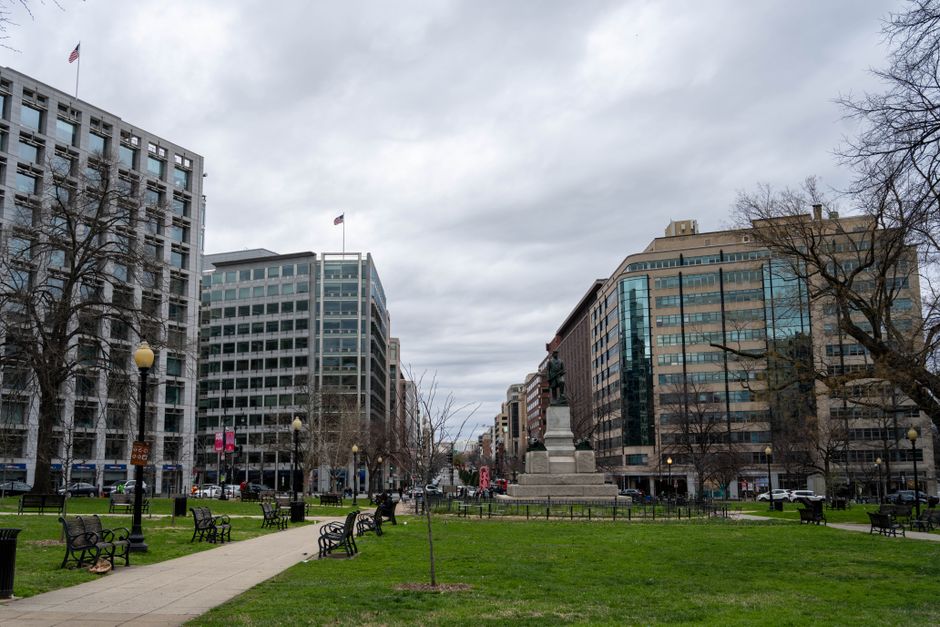
The office market in Washington DC faces a reckoning. Downtown vacancy rates have climbed to 17.8 percent in the second quarter of 2026, up from 12.3 percent three years ago, leaving landlords scrambling to reimagine aging commercial stock. But while competitors across K Street and New Downtown slash prices and convert underperforming towers into residential units, one local entrepreneur is betting on a different approach: radical renovation for a hybrid future.
Meridian Properties, helmed by founder and CEO Angela Chen, has acquired five mid-size office buildings throughout the Golden Triangle and near Metro Center since 2023, investing nearly $340 million in what she calls "adaptive modernization." Rather than abandoning the traditional office model, Meridian is retrofitting these buildings with flexible workspace, amenity-rich common areas, and mixed-use ground floors—transforming them into environments designed to lure back tenants who abandoned conventional offices during the pandemic surge.
The strategy appears to be working. Meridian's flagship property at 1515 L Street NW, a 1970s office tower that sat 31 percent vacant in early 2024, now operates at 84 percent occupancy after a $48 million renovation that added a rooftop terrace, co-working lounge, and fitness center. Rental rates rose to $42 per square foot annually—a 22 percent premium over comparable nearby spaces.
"The market didn't need fewer offices," Chen said in recent remarks to the Washington Real Estate Development Association. "It needed better offices." Her approach reflects a broader shift among DC's most forward-thinking developers: accepting that the pre-2020 office era is gone, but recognizing that knowledge workers still require collaborative physical space—just not in the form their parents inhabited.
The ripple effects extend beyond Meridian's portfolio. Competing developers have begun similar projects. Boston Properties recently announced a $125 million renovation of its Connecticut Avenue holdings. The shift has also buoyed related sectors: architectural and design firms, construction companies, and hospitality operators are all experiencing renewed demand.
Yet challenges remain. Interest rates, inflation in construction costs, and persistent hybrid work arrangements still weigh on the broader market. Meridian's success, while noteworthy, represents an exception rather than a trend—at least for now.
Still, as Congress returns to session and federal agencies grapple with return-to-office mandates, developers watching Meridian's performance are taking note. In a market searching for answers, one local company is showing that renovation, not retreat, might offer the most promising path forward.
This article was compiled by AI and screened before publishing. See our editorial standards.
How does this story make you feel?
Spread the word
About this article
Published by The Daily Washington DC
Daily brief
Free, in your inbox before 7am. Weekdays.
More in Business
