DC's Climate Leaders Chart Path Forward as City Aims for Net-Zero by 2050
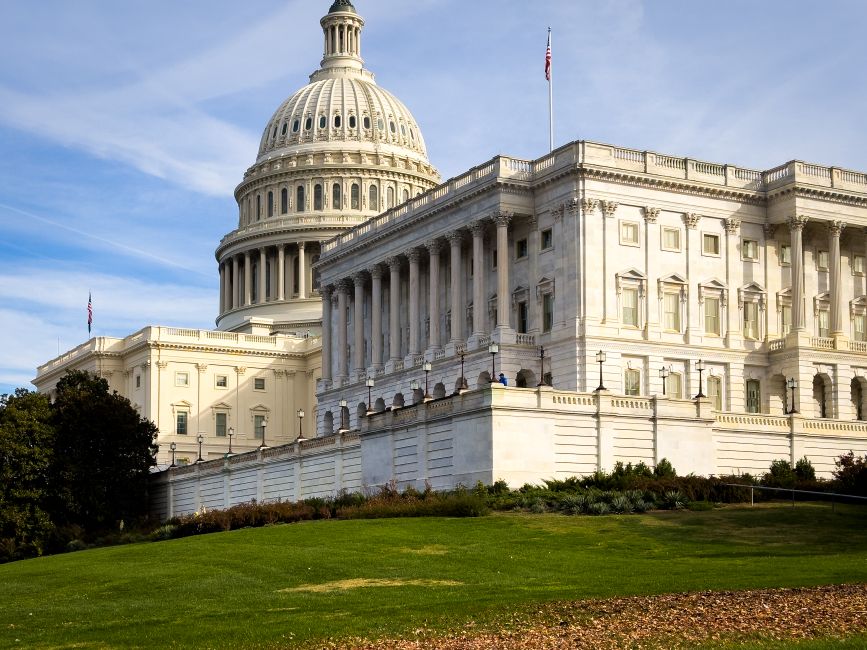
Environmental officials and sustainability experts gathered at Georgetown University outline ambitious targets for reducing emissions across the District.
Environmental officials and sustainability experts gathered at Georgetown University outline ambitious targets for reducing emissions across the District.
As temperatures soar across the District this summer, environmental leaders are stepping up their messaging on climate action, with a series of high-profile announcements underscoring Washington DC's commitment to becoming carbon-neutral within the next two decades.
The District Department of Energy and Environment hosted a sustainability summit last week at Georgetown University's Hariri Institute, drawing together city officials, nonprofit leaders, and academic researchers to discuss progress on the District's 2050 net-zero goals. The meeting highlighted significant challenges ahead, particularly in decarbonizing the region's aging building stock—a sector responsible for nearly 75 percent of DC's greenhouse gas emissions.
"We're at a critical juncture," said Dr. Elena Martinez, director of the Urban Institute's Climate and Energy Program, speaking at the Georgetown event. "The District has the policy framework in place, but implementation requires sustained investment and coordination across multiple stakeholders." The Institute released updated modeling suggesting DC must reduce emissions by 4.5 percent annually through 2030 to stay on track—a target that would require acceleration beyond current trajectories.
Environmental Justice advocates emphasized that climate action must prioritize neighborhoods most vulnerable to heat and flooding. Ward 7 and Ward 8 residents, who experience surface temperatures up to 8 degrees Fahrenheit higher than wealthier areas in Northwest DC, have historically received fewer resources for green infrastructure projects. Community leaders called for equitable distribution of federal funding flowing into DC's sustainability initiatives.
The District's electric vehicle adoption has gained momentum, with charging stations now numbering over 850 across the city, up from 400 in 2020. However, experts noted that transportation electrification alone cannot achieve net-zero targets. Building retrofits remain the primary focus, with particular attention to large commercial properties along Connecticut Avenue and K Street, which consume roughly one-third of downtown's energy.
The Department of Energy and Environment is currently reviewing applications for its latest grant cycle targeting green infrastructure projects in neighborhoods from Anacostia to Capitol Hill. Officials announced that approximately $18 million in funding will support tree-planting initiatives and permeable pavement installations aimed at reducing urban heat and managing stormwater runoff.
Despite recent Supreme Court decisions that have constrained federal environmental authority, local officials stressed their commitment to moving forward independently. "The District has demonstrated it can lead on climate without waiting for federal mandates," said a spokesperson for the mayor's office, noting that DC's municipal renewable energy procurement has increased to 60 percent of the city's electricity supply.
Observers suggest that how Washington DC executes its sustainability agenda over the next 24 months will signal broader momentum—or stagnation—in American cities grappling with climate targets amid political uncertainty.
This article was compiled by AI and screened before publishing. See our editorial standards.
How does this story make you feel?
Spread the word
About this article
Published by The Daily Washington DC
Daily brief
Free, in your inbox before 7am. Weekdays.
More in News