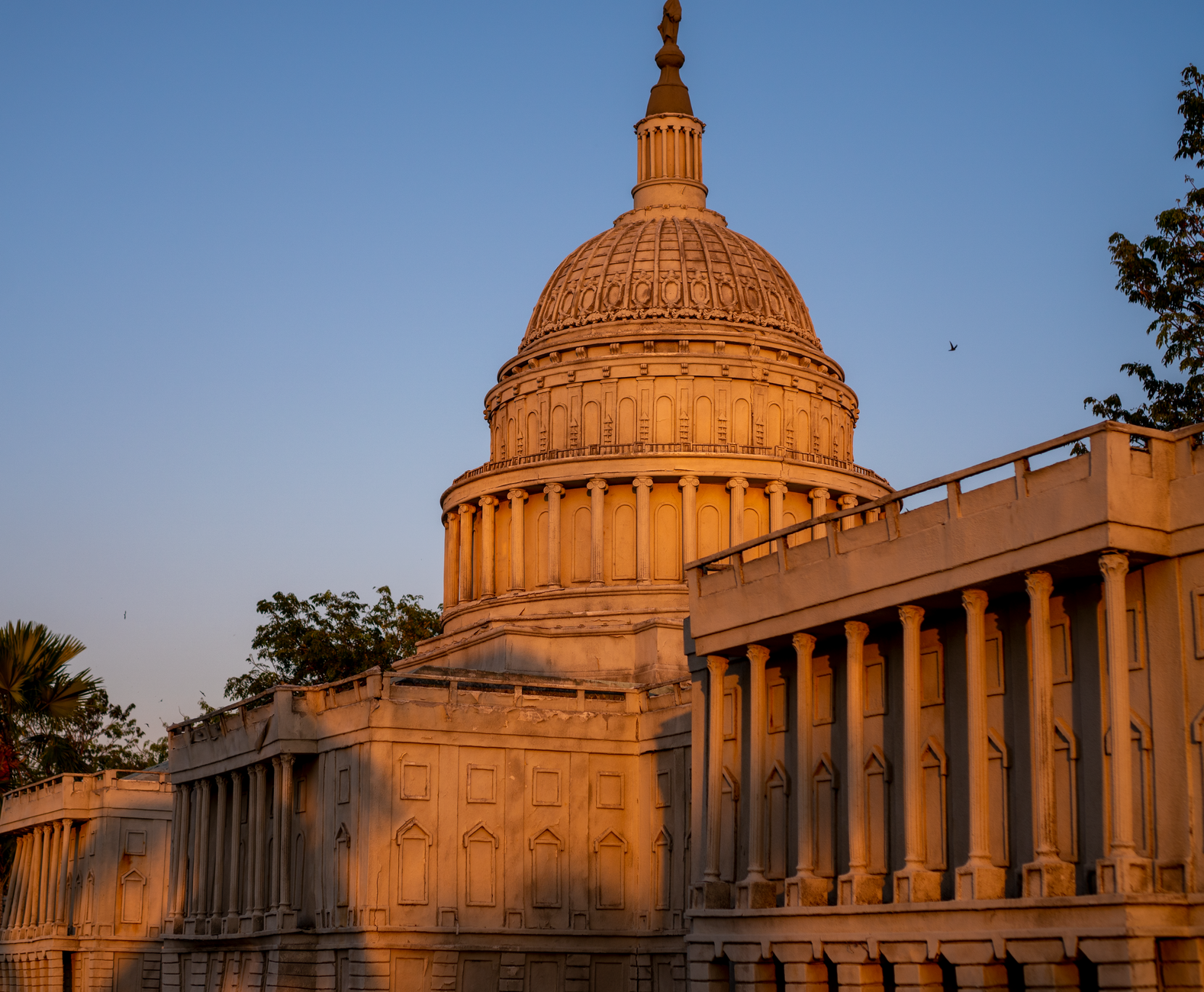
Washington DC faces a peculiar governing challenge: a Democratic municipal administration trying to maintain essential services while the federal government—its largest employer and a major revenue source—undergoes unprecedented restructuring under the Trump administration's efficiency agenda.
The DOGE-led cuts have already rippled through the District's economy. Federal workforce restructuring has reduced demand for office space along K Street and in the Navy Yard-Ballpark area, where commercial rents have declined 8-12 percent over the past eighteen months. Meanwhile, Mayor Muriel Bowser's administration has pursued a strikingly different path than comparable global cities facing fiscal crises.
Unlike Toronto, which slashed municipal services by 10 percent during its recent budget crisis, or Paris, which raised taxes on businesses and residents by 3-4 percent, DC has invested heavily in local economic resilience. The city committed $150 million to affordable housing preservation in Anacostia and NoMa—neighborhoods experiencing rapid gentrification—while simultaneously protecting municipal workforce compensation. Bowser's team negotiated new collective bargaining agreements that preserved pension benefits, a strategy that contrasts with London's approach of freezing public sector pay for three years.
The gamble appears to be working, at least for now. DC's unemployment rate sits at 4.2 percent, below the national average, and local tax revenue from sales and property taxes has held steady despite federal sector volatility. The city's $17.7 billion budget for fiscal year 2027 maintains funding for Metro, the DC Public Schools, and the Department of Energy and Environment—critical services that sustain the city's livability.
But the strategy carries risk. Unlike Seoul or Singapore, which have diversified their economies through aggressive tech sector recruitment, DC remains heavily dependent on federal spending and professional services. The loss of an estimated 40,000 federal positions citywide threatens this foundation.
Local officials are quietly watching how Berlin manages its post-government restructuring, given that city's experience with federal workforce consolidation after German reunification. The comparison isn't perfect—DC's federal presence is far more concentrated—but the lessons about economic transition planning resonate.
What distinguishes DC's approach is its willingness to embrace local revenue growth even as federal contributions shrink. The city recently expanded its tax base by clarifying remote worker taxation rules, generating an estimated $85 million annually. Most comparable cities would have proposed immediate service cuts instead.
Whether this strategy proves sustainable will become clear by 2027. For now, Bowser's administration is betting that protecting its residents and workers, rather than slashing them, offers the best path through federal austerity.
This article was compiled by AI and screened before publishing. See our editorial standards.