The Numbers Behind Capitol Hill's Displacement Crisis: 8,400 Residents Gone as Rents Climbed 67%
New demographic data reveals the staggering scale of long-term resident loss from one of Washington's most politically symbolic neighborhoods.
New demographic data reveals the staggering scale of long-term resident loss from one of Washington's most politically symbolic neighborhoods.
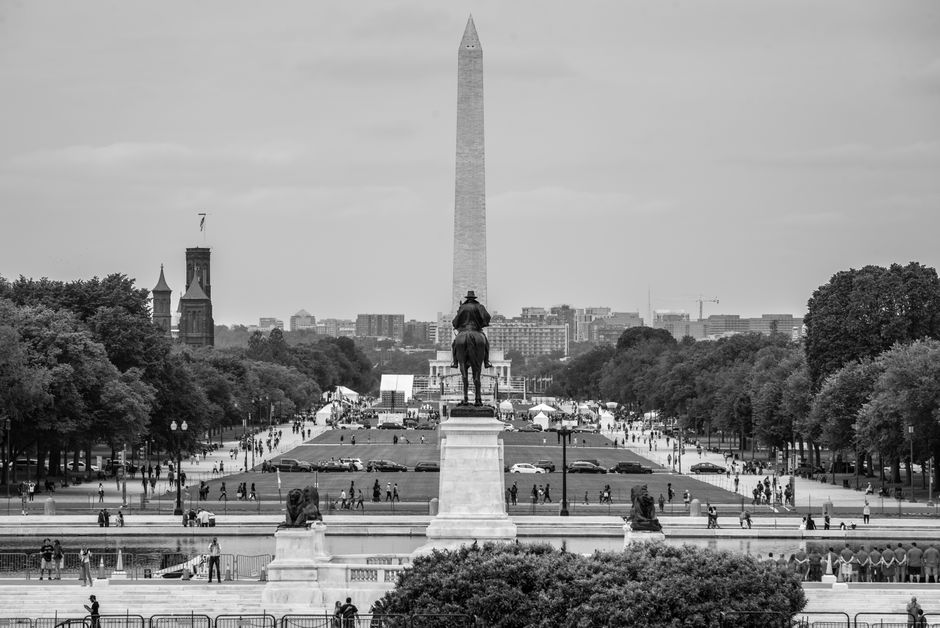
Capitol Hill has shed 8,400 long-term residents over the past decade as median rents surged 67 percent, pushing working-class and middle-income families out of a neighborhood that sits in the literal shadow of Congress. The figures, drawn from DC Office of Planning data and American Community Survey estimates compiled through late 2025, mark one of the steepest displacement rates of any urban neighborhood on the Eastern Seaboard.
The timing matters. With the Trump administration's federal workforce restructuring eliminating or relocating thousands of government jobs, and Mayor Muriel Bowser's office projecting a $1.1 billion budget shortfall through fiscal year 2027, the city has almost no fiscal cushion left to subsidize affordable housing at the scale the crisis demands. Residents who survived the first wave of gentrification in the early 2010s are now confronting a second, sharper wave with far fewer policy tools available to stop it.
In 2015, the median one-bedroom apartment on the Hill — defined here as the area bounded by the Capitol grounds to the west, the Anacostia River to the east, and H Street NE to the north — rented for roughly $1,480 a month. By the fourth quarter of 2025, that figure had climbed to $2,472, according to CoStar Group market data. Studios on blocks east of 15th Street SE, once reliably available under $1,200, now list at $1,900 or above. The neighborhood's non-white population, which stood at 43 percent in the 2010 census, had dropped to 29 percent by the 2024 American Community Survey one-year estimates — a 14-point collapse in 14 years.
Eastern Market, the 150-year-old public market on 7th Street SE that for generations served as the neighborhood's economic anchor, now draws weekend foot traffic dominated almost entirely by higher-income newcomers. The surrounding blocks between Pennsylvania Avenue SE and North Carolina Avenue SE have seen assessed residential property values jump an average of 112 percent since 2014, according to DC Office of Tax and Revenue records. Longtime commercial tenants on Barracks Row — the stretch of 8th Street SE that once housed independent diners, hardware stores and laundromats — have been replaced largely by wine bars and boutique fitness studios.
The Capitol Hill Community Foundation, a nonprofit that has tracked neighborhood demographics since 1998, documented 2,100 households leaving the 20003 zip code alone between 2018 and 2024. The 20002 zip code, covering the northern stretch of the Hill running up toward H Street NE, lost another estimated 3,600 households over the same period. The remaining displacement is spread across 20001 and the edges of 20019, where pressure from the NoMa development corridor has pushed renters further east toward the Anacostia waterfront.
The DC Department of Housing and Community Development allocated $12 million through its Tenant Opportunity to Purchase Assistance program in fiscal year 2025, but housing advocates at the Washington Legal Clinic for the Homeless say that fund is routinely exhausted within the first six weeks of the fiscal year. The Housing Production Trust Fund, which Bowser's administration has cited repeatedly as its primary affordable-housing vehicle, disbursed $144 million in fiscal year 2024 — a figure that advocates say falls roughly $400 million short of what independent economists estimate is needed annually to stabilize displacement across the District.
Ward 6 Council Member Charles Allen has introduced legislation that would cap annual rent increases in single-family rentals at 3 percent above the Consumer Price Index, but the bill has stalled in committee since February with no scheduled markup hearing. Federal budget uncertainty, particularly around HUD block grants that fund roughly 18 percent of DC's affordable housing pipeline, has made long-range planning nearly impossible for nonprofits working east of the Anacostia River.
For the families still holding on — many of them in the remaining rent-controlled units clustered between 12th and 14th Streets SE — the practical calculus is getting harder. Residents facing non-renewal notices can contact the DC Office of the Tenant Advocate at 2000 14th Street NW, which provides free legal counsel, or apply through the Emergency Rental Assistance Program before the next funding window closes on August 15, 2026. Neither option reverses the math. But the data makes clear that without intervention at a scale the city has not yet attempted, the Hill's transformation from diverse working neighborhood to high-income enclave will be statistically complete within another decade.
How does this story make you feel?
Spread the word
About this article
Published by The Daily Washington DC
Daily brief
Free, in your inbox before 7am. Weekdays.
More in News