By the Numbers: The Surprising Data Behind D.C.'s Shifting Population
New census estimates show Washington D.C. is growing again — but the people arriving look nothing like the ones who left.
New census estimates show Washington D.C. is growing again — but the people arriving look nothing like the ones who left.
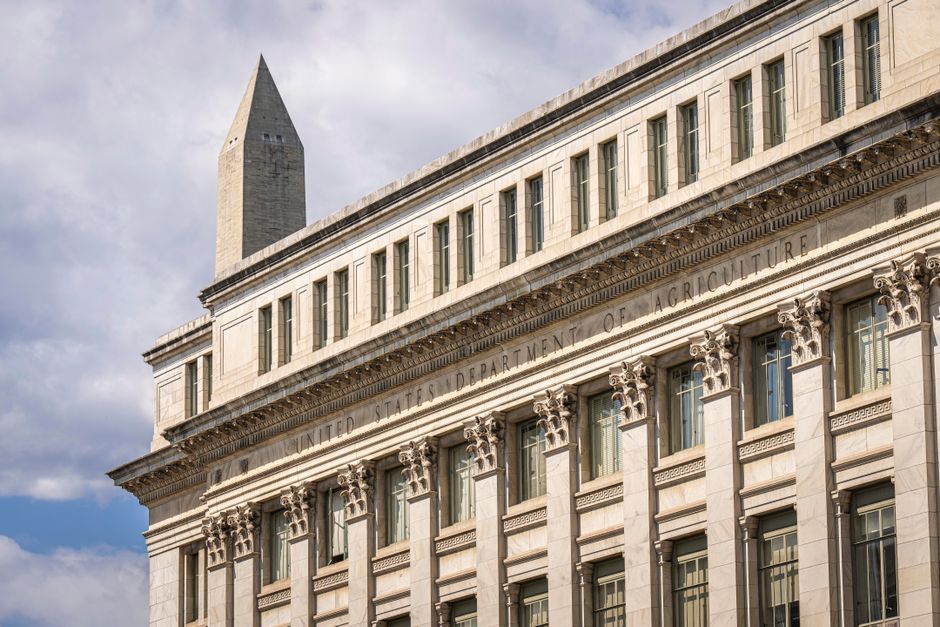
Washington D.C.'s population climbed to an estimated 689,545 residents as of January 2026, according to figures released last month by the D.C. Office of Planning — a gain of roughly 11,000 people since the post-pandemic trough recorded in mid-2023. The number is significant because it snaps a two-year streak of net population loss that alarmed city planners and rattled the budget projections of Mayor Muriel Bowser's administration. The capital is growing again. The question is who, exactly, is showing up.
The timing could hardly be more complicated. The Trump administration's sweeping federal workforce restructuring, driven partly by the Department of Government Efficiency, has pushed thousands of federal employees out of government jobs since late 2024. The Office of Personnel Management has confirmed more than 28,000 federal separations in the Washington metropolitan area over the past 18 months. That churn has scrambled the usual calculus of who comes to D.C. and why — and the new data captures the early effects of that disruption in granular, sometimes counterintuitive detail.
The arrivals are not spread evenly across the city. Anacostia, long starved of investment east of the Anacostia River, recorded its sharpest population uptick since 2010, with the D.C. Office of Planning estimating a 4.3 percent increase in Ward 8 residents between 2024 and 2026. NoMa — the corridor north of Massachusetts Avenue NE that was largely warehouses a decade ago — added an estimated 2,800 units of occupied housing in the same period, according to data compiled by the NoMa Business Improvement District. Average asking rent in NoMa hit $2,640 per month for a one-bedroom in May 2026, up 7 percent year-over-year, a figure that underscores just how thoroughly the neighborhood has repositioned itself.
Meanwhile, the traditional federal-worker enclaves are losing residents. Zip code 20003, which covers Capitol Hill and portions of Eastern Market, shed a net 1,200 households between January 2025 and January 2026 — a direct read on the displacement caused by federal layoffs and early retirements. The Capitol Hill BID reported a 14 percent increase in commercial vacancy on Pennsylvania Avenue SE during the same window, a number the organization flagged in its spring 2026 quarterly report as its worst showing in a decade.
The demographic shift is sharper than the raw population number suggests. D.C.'s Office of Planning data shows that in-migration from Texas, Florida, and Georgia — states that have themselves seen significant internal migration driven by remote work — accounted for 38 percent of all new D.C. arrivals in 2025, up from 24 percent in 2021. The new arrivals skew younger: the median age of incoming residents dropped to 31.4 years in 2025, compared to 33.9 in 2019.
Tech and lobbying sectors are absorbing many of them. The K Street corridor and the emerging tech cluster around Union Market have both posted job growth. The Washington DC Economic Partnership reported 4,200 net private-sector jobs added in the first quarter of 2026, partially offsetting federal losses. Still, household income among new arrivals is running about $12,000 below the citywide median of $101,800, according to preliminary American Community Survey data — a gap that signals the next pressure point for the city's already strained affordable housing stock.
City agencies and housing advocates are watching a specific deadline: the D.C. Housing Authority's project-based voucher waitlist, frozen since March 2025, is scheduled to reopen in September 2026. How the Bowser administration handles that reopening — and whether Congress restores the $340 million in federal housing grants that DOGE-linked budget reviews put on hold — will go a long way toward determining whether the population growth registers as a genuine urban revival or simply accelerates displacement into Prince George's County and beyond. The numbers are moving. What they add up to is still being written.
How does this story make you feel?
Spread the word
About this article
Published by The Daily Washington DC
Daily brief
Free, in your inbox before 7am. Weekdays.
More in News