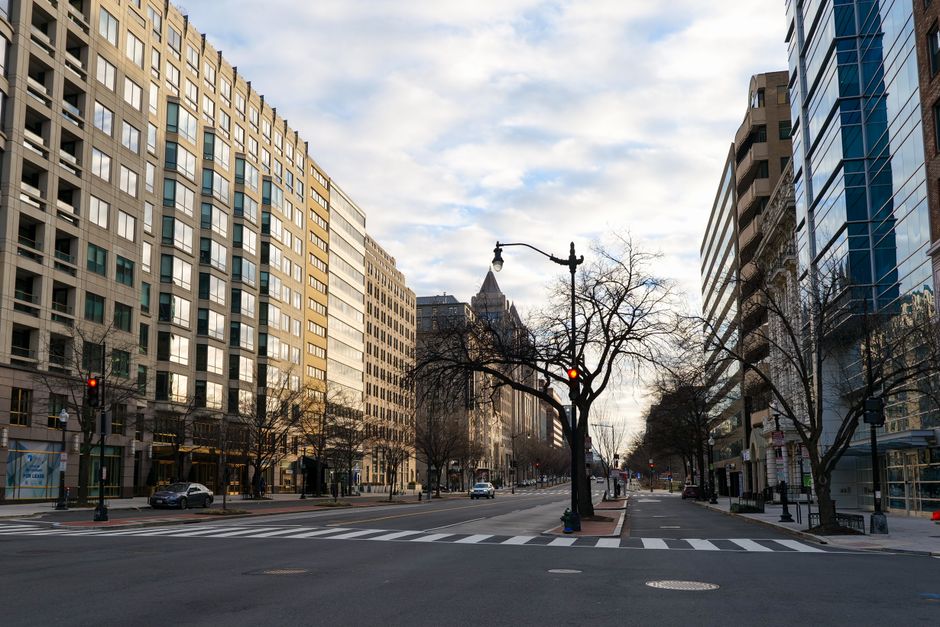
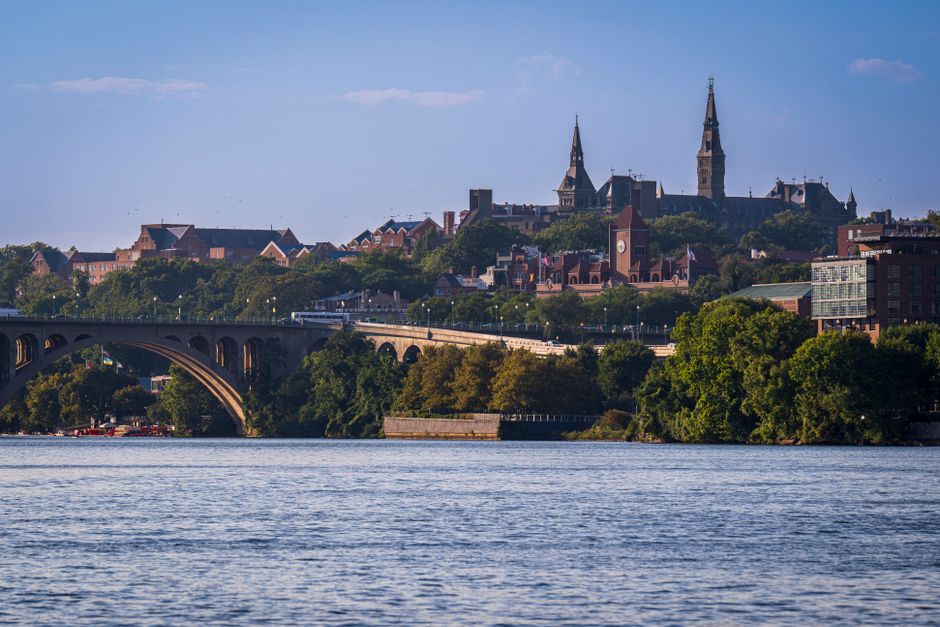
Washington DC's Metropolitan Police Department closed just 38 percent of violent crime cases last year, according to figures released Monday by the Council's Committee on the Judiciary and Public Safety — a clearance rate that trails London's Metropolitan Police by 14 percentage points and Seoul's National Police Agency by more than 20. The numbers surfaced during a week when the District was already absorbing fresh anxieties about safety heading into the July Fourth weekend, and they gave ammunition to both critics of Mayor Muriel Bowser's administration and advocates calling for a wholesale rethink of how the city funds and deploys its roughly 3,500 sworn officers.
The timing is pointed. DOGE-driven federal workforce cuts have thinned out the daytime population in neighborhoods like Capitol Hill and Penn Quarter, which traditionally counted on a steady flow of government workers to keep commercial corridors lively and informally watched. Fewer eyes on U Street or K Street means fewer deterrents — a dynamic criminologists have documented in other cities when anchor employers pull back. At the same time, gentrification pressures in Anacostia and NoMa are reshuffling where vulnerable populations live and where police resources actually go, creating coverage gaps that MPD's current precinct boundaries, drawn in 2004, were never designed to address.
What the Five-City Comparison Actually Shows
The comparative report, prepared by the DC Policy Center and presented at the Wilson Building on Wednesday, benchmarked the District against London, Tokyo, Amsterdam, Singapore and Seoul across six categories: officer-to-resident ratios, clearance rates, community liaison programs, response times, recidivism support infrastructure and technology integration. Washington ranked last or second-to-last in four of the six. The starkest gap was in community policing density: Amsterdam deploys one dedicated neighborhood officer per 2,800 residents under its Wijkagent program; Washington's closest equivalent, the MPD's Police Service Areas structure, assigns one PSA lieutenant to zones covering an average of 11,400 residents.
Tokyo and Singapore both registered homicide clearance rates above 90 percent in 2025, buoyed by centralized forensic databases and mandatory inter-agency data sharing that have no direct counterpart in the District's fragmented system, which still relies partly on case management software installed during the Adrian Fenty administration. Seoul invested the equivalent of $340 million in AI-assisted dispatch and predictive patrol routing between 2022 and 2025; MPD's entire technology modernization budget for fiscal year 2026 is $12.4 million. London's Violence Reduction Unit, stood up in 2019 and now funded at roughly £57 million annually, coordinates schools, health services and housing authorities under a single public-health framework — a model the report explicitly recommended the District adopt, potentially anchoring it at the existing DC Department of Health offices on Massachusetts Avenue NE.
Pressure Builds Ahead of the Holiday Weekend
Ward 8 Council member Trayon White and Ward 6's Charles Allen both attended Wednesday's hearing and pressed MPD Chief Pamela Smith on whether the department would request emergency supplemental funding before the October 1 budget deadline. The Council approved a $934 million public-safety budget in May, but the DC Policy Center analysis argues that catching up to peer cities within five years would require sustained annual increases of at least 8 percent, plus a structural overhaul of the 900 block of Brentwood Road NE, where MPD's evidence processing unit has a documented backlog stretching to 14 months.
The Bowser administration said it would respond formally to the report by July 18. Residents who live near Nationals Park, where crowds will gather for Fourth of July fireworks, or along the Georgia Avenue corridor in Petworth should know that MPD has scheduled an augmented patrol deployment through July 5 under its existing Holiday Safe Streets protocol — additional officers on foot in those zones from 6 p.m. to 2 a.m. Whether that temporary surge addresses the structural deficits the report identified is a question the Council's judiciary committee says it intends to revisit in September, when the next round of MPD performance audits is scheduled for public release.