Washington Lags Behind London and Singapore in Replacing Duplicate Street Imagery — Here's Why
As cities worldwide overhaul their mapping databases to purge redundant and outdated imagery, DC's fragmented jurisdiction is slowing the process down.
As cities worldwide overhaul their mapping databases to purge redundant and outdated imagery, DC's fragmented jurisdiction is slowing the process down.
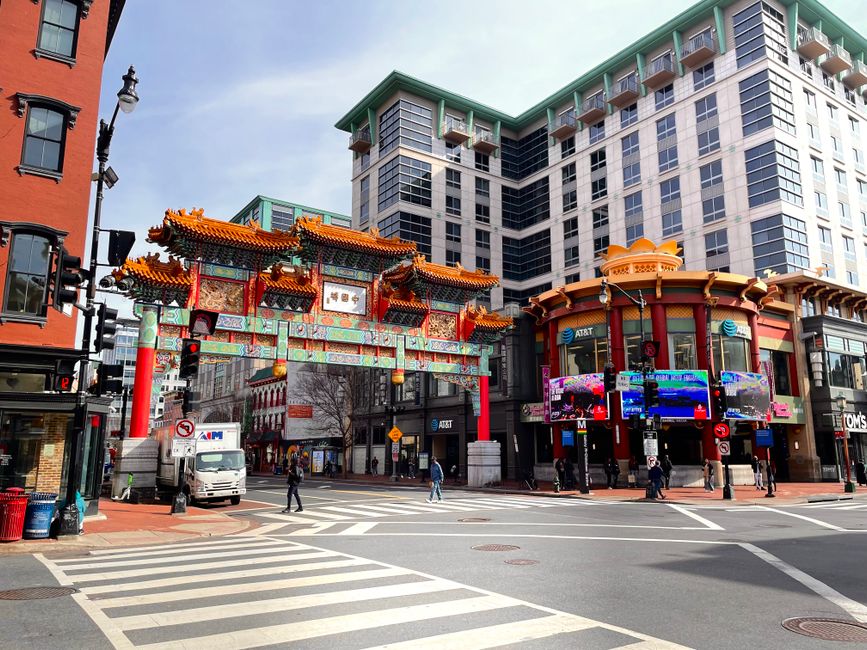
Washington's Department of Transportation has been working through a backlog of duplicate and outdated images embedded in the city's public-facing digital street mapping systems, a problem that city technology officials have acknowledged is more stubborn here than in most comparably sized capitals. The core issue: DC sits inside a tangle of overlapping jurisdictions — federal, district, and private — that complicates even routine database maintenance.
The timing matters. Mayor Muriel Bowser's administration is trying to modernize city services under the DC Digital Equity Initiative while simultaneously fighting federal funding cuts tied to the Trump administration's DOGE restructuring effort. Several tech-adjacent municipal contracts have been frozen or delayed since early 2025, and duplicate image cleanup — low-profile but essential for accurate permitting, emergency response routing, and infrastructure inspection — has felt the squeeze.
Duplicate image data isn't an abstract nuisance. When a street database carries two or three versions of the same intersection — say, the corner of Florida Avenue NW and U Street, or the stretch of Martin Luther King Jr. Avenue SE running through Anacostia — field crews and automated systems can pull outdated imagery showing construction that has since finished, storefronts that no longer exist, or bike lanes that were restriped. That leads to mis-routed inspections and errors in permit applications filed through the city's ProjectDox platform, which the District Department of Consumer and Regulatory Affairs uses to manage building and construction permits.
London's Ordnance Survey completed a systematic deduplication pass of its urban street-level imagery database in late 2024, finishing a three-year program that standardized image tagging across 33 boroughs. Singapore's Urban Redevelopment Authority runs quarterly automated audits that flag duplicate or conflicting visual records before they propagate into planning tools. Neither city faces DC's specific problem: roughly 17 percent of major arterials inside the District run through or alongside land controlled by the National Park Service or federal agencies, which maintain their own separate imagery datasets with no automatic sync to the District's system.
The nonprofit DC Policy Center has previously noted the broader challenge of DC's split infrastructure governance in its annual State of the District reports, though the center has not published figures specific to image database duplication. Estimates from municipal technology conferences in 2025 suggested mid-sized cities globally spend between $400,000 and $1.2 million annually on imagery database hygiene, depending on how much of the work is automated.
The problem is most visible in areas that have changed fastest. Anacostia, where development along Good Hope Road SE accelerated after 2022, and NoMa — bounded roughly by New York Avenue NE and Florida Avenue NE — both have street-level datasets that advocates say lag real conditions by one to two years in some blocks. The NoMa BID, the business improvement district covering that corridor, has pushed the city to update its public mapping layers ahead of planned streetscape improvements near the New York Avenue Metro station.
The District's Office of the Chief Technology Officer, which oversees the DC Geographic Information System program, has said it plans a systematic review of street imagery metadata as part of a broader GIS modernization effort, though no completion date has been publicly announced. The OCTO's GIS program, headquartered at 1350 Pennsylvania Avenue NW, is the central repository for the city's spatial data.
For residents and small businesses filing permits or disputing assessments based on street-level imagery — a more common occurrence than most people realize — the practical advice is straightforward: if a city-facing application asks you to confirm location imagery, submit your own timestamped photographs alongside the automated screenshot. Several permit expeditors working the NoMa and H Street NE corridors recommend doing so as a matter of course, given how frequently the system presents imagery that is 18 months or more out of date. The DCRA's ProjectDox portal accepts supplemental photo attachments on most permit types, and using that option can prevent processing delays that otherwise run two to four weeks.
How does this story make you feel?
Spread the word
About this article
Published by The Daily Washington DC
Daily brief
Free, in your inbox before 7am. Weekdays.
More in News


