DC's Duplicate Image Problem: How the Capital Stacks Up Against London, Seoul and São Paulo
Washington's public agencies and cultural institutions are quietly wrestling with a digital records crisis that peer cities tackled years ago.
Washington's public agencies and cultural institutions are quietly wrestling with a digital records crisis that peer cities tackled years ago.
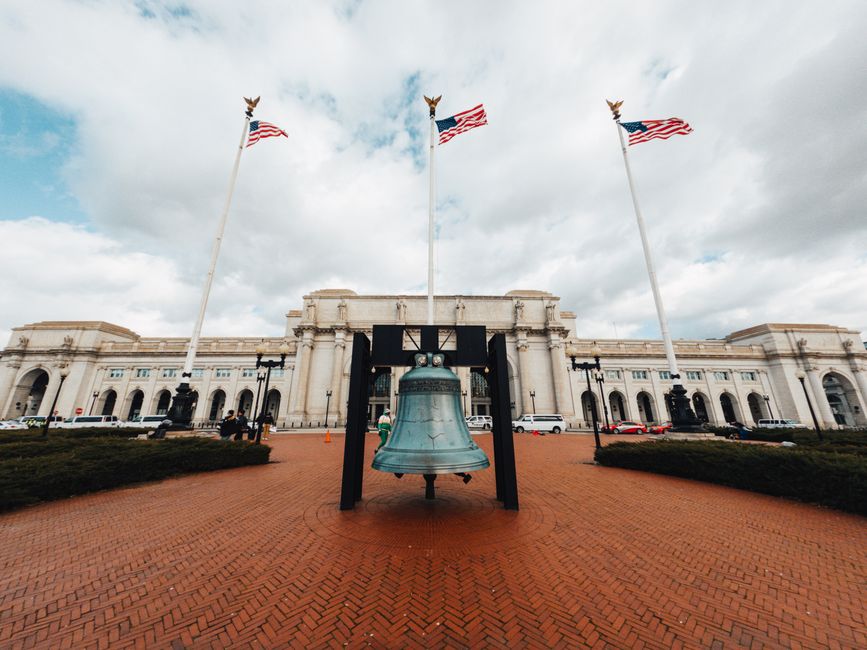
Washington DC's government databases, from the DC Office of Planning's property records to the Smithsonian Institution's vast digitized collections, contain tens of thousands of duplicate image files — redundant scans, re-uploaded photographs, and mislabeled assets that clog storage systems, inflate IT budgets, and make public records harder to search. The problem is not new. What is new is the pressure to fix it.
Federal workforce cuts under the Trump administration's DOGE restructuring initiative have pushed city and federally adjacent agencies to scrutinize overhead costs with unusual intensity this year. For institutions that share infrastructure or funding pipelines with federal bodies — and in Washington, almost every major cultural organization does — that scrutiny now lands squarely on digital asset management. Duplicate image files are a mundane problem, but they carry real cost: redundant storage, slower retrieval systems, and broken metadata trails that undermine archival integrity.
The DC Public Library system, which maintains digital branches across all eight wards including the MLK Jr. Memorial Library on G Street NW, completed an internal audit of its digitized photograph collection in early 2026. The library did not release full figures publicly, but the audit was described in a March 2026 budget presentation to the DC Council as part of a broader effort to consolidate digital infrastructure ahead of potential funding reductions. The Martin Luther King Jr. Library alone holds more than 200,000 digitized images in its Washingtoniana collection.
London's Metropolitan Archives, which manages records for the Greater London Authority, completed a two-year deduplication project in 2024 using automated hash-matching software. The GLA reported a 34 percent reduction in active storage requirements across its photographic holdings — a figure cited in the authority's 2024-25 annual report. Seoul's National Museum of Korea deployed AI-assisted duplicate detection across its online collections portal in 2023, cutting retrieval times for curators working remotely. São Paulo's municipal archive system, the Arquivo Histórico de São Paulo, tackled the same problem through a 2022 partnership with the University of São Paulo's computer science faculty, allowing graduate researchers to build and test deduplication tools on live collections.
Washington has no equivalent coordinated program. The Smithsonian, which operates 19 museums and galleries and manages one of the world's largest museum digitization programs, handles deduplication internally across individual units with no publicly documented system-wide standard. The National Archives and Records Administration, headquartered in part at its Pennsylvania Avenue NW building, operates under its own federal framework, one now under pressure from the same DOGE-era staffing reductions affecting agencies across the Mall.
The stakes extend beyond archivists. In neighborhoods like NoMa and Anacostia, where development pressure and gentrification have accelerated sharply since 2022, accurate and searchable historical image records matter for planning disputes, historic preservation filings, and community documentation. When a neighborhood group challenging a demolition permit in Anacostia needs photographic evidence of a building's historical character, a duplicate-clogged or poorly indexed archive slows that process down. The DC Historic Preservation Office, based on K Street NW, fields those requests regularly.
The cost of inaction compounds. Cloud storage pricing for government-tier contracts typically runs between $0.02 and $0.05 per gigabyte per month, meaning even a modest archive carrying 500,000 redundant image files at average resolution can generate tens of thousands of dollars in unnecessary annual expenditure. For city agencies already absorbing federal funding uncertainty in the 2026 fiscal year, that is not an abstract number.
Mayor Muriel Bowser's office has not announced a dedicated deduplication initiative, and the DC Office of the Chief Technology Officer did not respond to a request for comment before deadline. What happens next likely depends on whether the DC Council's Committee on Technology and the Environment, which oversees OCTO's budget, treats digital asset hygiene as a line-item priority in fall 2026 budget negotiations. Given what London, Seoul, and São Paulo have already demonstrated — measurable savings, faster public access, cleaner archives — the harder question for Washington may be why it waited this long.
How does this story make you feel?
Spread the word
About this article
Published by The Daily Washington DC
Daily brief
Free, in your inbox before 7am. Weekdays.
More in News


