DC Is Auditing Its Duplicate Public Art. Other Cities Did This Years Ago.
Washington is finally cataloguing and replacing redundant public imagery across its neighborhoods, but London and Seoul got there first.
Washington is finally cataloguing and replacing redundant public imagery across its neighborhoods, but London and Seoul got there first.
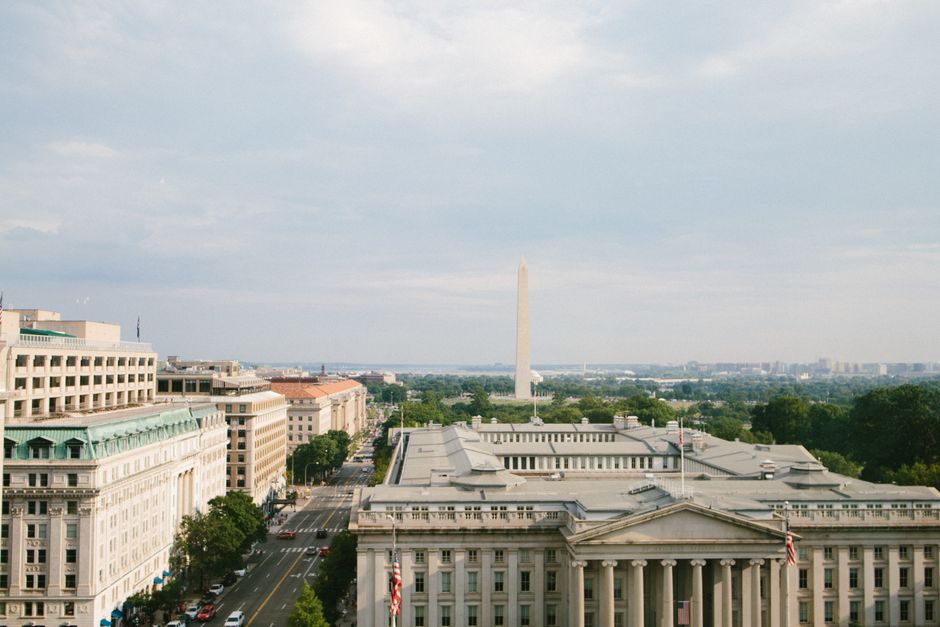
The District of Columbia is midway through a systematic audit of duplicate and outdated public imagery — murals, commemorative plaques, interpretive signage, and government-installed graphic panels — that have proliferated across city-owned property over the past two decades, with multiple identical or near-identical installations sometimes appearing within blocks of each other. The DC Office of Planning confirmed this spring that a formal inventory is underway, though city officials have not yet published a completion timeline or a full public-facing database.
The timing matters. With the Trump administration's restructuring of the federal workforce rippling through the local economy, Mayor Muriel Bowser's government has been under unusual pressure to justify every line of discretionary spending. Redundant public art installations — some funded through the DC Commission on the Arts and Humanities, others through neighborhood Advisory Neighborhood Commission budgets — represent a visible, politically awkward example of overlapping municipal expenditure at a moment when the city is defending its budget priorities to both residents and a skeptical federal landlord.
The problem is most visible in two neighborhoods that have undergone rapid investment in recent years. Along the H Street NE corridor, at least four separate interpretive history panels installed between 2018 and 2024 cover overlapping ground on the street's post-riot rebuilding history, with two of them — near 12th Street NE and again near 14th Street NE — using nearly identical photography and text sourced from the same DC Public Library archive. In NoMa, the business improvement district funded a series of large-format graphic murals on utility boxes starting in 2019; by 2023, a parallel program run through the DC Department of Transportation had placed visually similar designs on the same blocks, creating what residents and local arts advocates have described as a cluttered, incoherent streetscape.
The NoMa BID, which covers roughly the area bounded by Florida Avenue NE, New York Avenue NE, and North Capitol Street, spent an estimated $340,000 on its street-level public art program between 2019 and 2024, according to figures the organization has published in its annual reports. How much of that investment overlaps with separately funded city installations on the same corridors has not been independently calculated, but the audit underway at the Office of Planning is designed in part to answer exactly that question.
Washington is not the first major city to confront the problem of duplicate public imagery, and its peers offer instructive comparisons. London's Art on the Underground program, administered by Transport for London, has maintained a centralized commissioning registry since 2000, specifically to prevent stations and street-level TfL property from receiving duplicate or redundant artwork. The program requires all new installations to be checked against an existing digital archive before approval. Seoul's metropolitan government launched a similar public art deduplication initiative in 2017 under its Seoul Design Foundation, cataloguing more than 8,400 public art objects citywide and flagging roughly 1,200 as candidates for removal or replacement due to redundancy or disrepair.
Berlin offers perhaps the most directly relevant model. After German reunification created a patchwork of East and West Berlin public signage and commemorative infrastructure, the city government undertook a decade-long rationalization program, consolidating overlapping historical markers under a single curatorial authority. That process, completed in stages between 2003 and 2014, is now cited by urban planning researchers as a benchmark for municipal image management in politically complex cities — a category Washington, given its federal-local governance tensions, fits neatly.
DC's audit is expected to produce a set of replacement and consolidation recommendations by the end of fiscal year 2026, which closes September 30. Residents in affected neighborhoods can submit comments through the DC Office of Planning's online engagement portal, which has been active since March. The Commission on the Arts and Humanities is separately reviewing its grant criteria to require applicants to check a forthcoming public art registry before submitting installation proposals — a procedural change that, if adopted, would bring Washington broadly in line with what London has required for the past quarter century.
How does this story make you feel?
Spread the word
About this article
Published by The Daily Washington DC
Daily brief
Free, in your inbox before 7am. Weekdays.
More in News