DC's Duplicate Street Art Problem: How the Capital Stacks Up Against London and Seoul
Cities worldwide are grappling with how to manage repeated, low-quality image installations in public spaces — and Washington DC's record is decidedly mixed.
Cities worldwide are grappling with how to manage repeated, low-quality image installations in public spaces — and Washington DC's record is decidedly mixed.
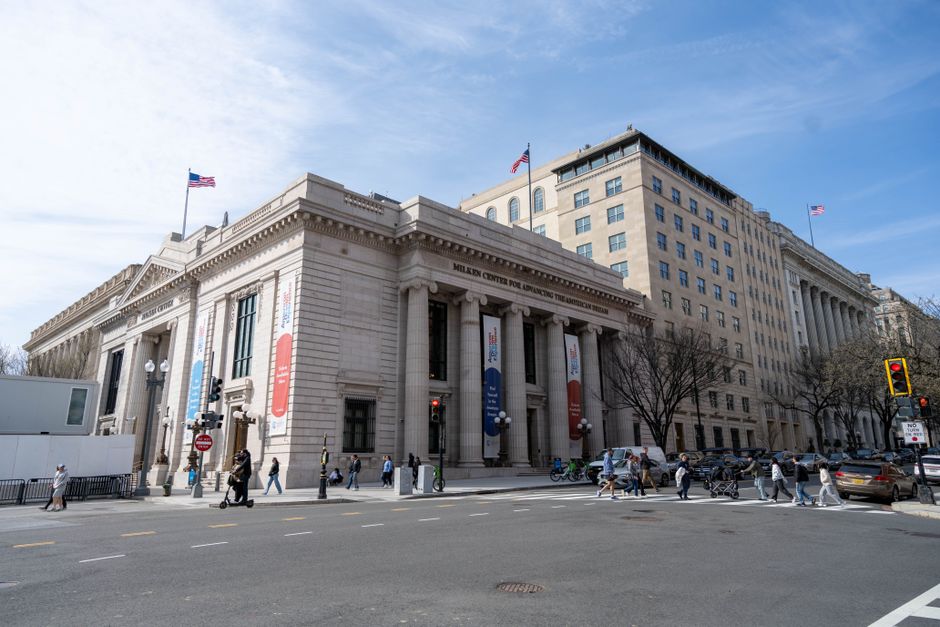
Dozens of identical printed murals have appeared on commercial facades across the H Street NE corridor and sections of Anacostia's Martin Luther King Jr. Avenue over the past 18 months, duplicating images that already appear elsewhere in the same neighborhoods. The DC Office of Planning has received a growing number of formal complaints from community organizations asking the city to audit and replace the repeated artwork, according to public records filed with the office in early 2026.
The issue matters now for a specific reason: Washington DC is in the middle of a federally disrupted budget cycle. With the Trump administration's DOGE-driven restructuring pulling money from agencies that historically supplemented DC's arts and cultural programming, Mayor Muriel Bowser's government has leaned harder on private installation agreements to fill public walls. That pressure has created a shortcut culture — vendors repeating approved image files across multiple sites rather than commissioning original work for each location.
The DC Commission on the Arts and Humanities, which administers the city's public art program and distributed roughly $4.5 million in grants during fiscal year 2025, has a stated policy requiring original artwork for each commissioned site. The problem, according to documents posted on the commission's website, is that the policy applies only to grants it directly funds — not to the broader category of privately sponsored installations that merely require a permit from the DC Department of Consumer and Regulatory Affairs.
Two specific programs illustrate the gap. The Anacostia Arts Center on Good Hope Road SE and the NoMa Business Improvement District, which covers the stretch of New York Avenue NE between North Capitol Street and Florida Avenue, both run separate mural programs with their own curatorial standards. The NoMa BID in particular has published guidelines requiring artists to submit unique image files for each wall. Anacostia Arts Center staff have publicly described their vetting process on social media, though the center has not issued a formal policy document as of this writing.
Meanwhile, permit records from DCRA show that at least 14 installation permits for exterior graphics were issued in Ward 6 and Ward 7 combined between January and May 2026 — several to the same vendor, a detail that raised flags among residents who attended a Ward 7 Advisory Neighborhood Commission meeting in March.
Other major cities have moved more decisively. Transport for London, which manages hundreds of permitted mural sites across the Underground network and surrounding streets, introduced a digital registry in 2024 that flags duplicate image submissions automatically before a permit is approved. Seoul's Metropolitan Government launched a similar image-hash verification system for its public wall program in the Mapo district in late 2023, with city officials citing a reduction in repeated installations at that year's annual review of the Mapo Art Wall scheme.
DC has no equivalent automated system. The closest analog is a spreadsheet-based log maintained by the DC Commission on the Arts and Humanities, which staff update manually and which does not cover privately permitted work. That means a vendor can legally install the same graphic on a wall near Union Market on 6th Street NE and again two miles south on Pennsylvania Avenue SE without triggering any automatic review.
The fiscal pressure is not going away. With federal uncertainty continuing to squeeze the District's ability to fund arts infrastructure, the gap between DC's ambitions and its enforcement capacity is likely to widen through the remainder of 2026.
Community organizations that want to push for stronger standards have a concrete option available now: formal comments submitted to the DC Office of Planning before its next public space rule review, scheduled for the fall 2026 cycle, can directly influence permit conditions for exterior graphics. The NoMa BID's existing guidelines offer a workable template. Until the city adopts something comparable at a citywide level, the same faces will keep staring back from walls that were supposed to tell different stories.
How does this story make you feel?
Spread the word
About this article
Published by The Daily Washington DC
Daily brief
Free, in your inbox before 7am. Weekdays.
More in News