How Washington's Public Records Got Buried Under the Same Photo, Twice
A quiet bureaucratic failure inside DC's document archives has turned routine government transparency into a guessing game for residents and researchers alike.
A quiet bureaucratic failure inside DC's document archives has turned routine government transparency into a guessing game for residents and researchers alike.
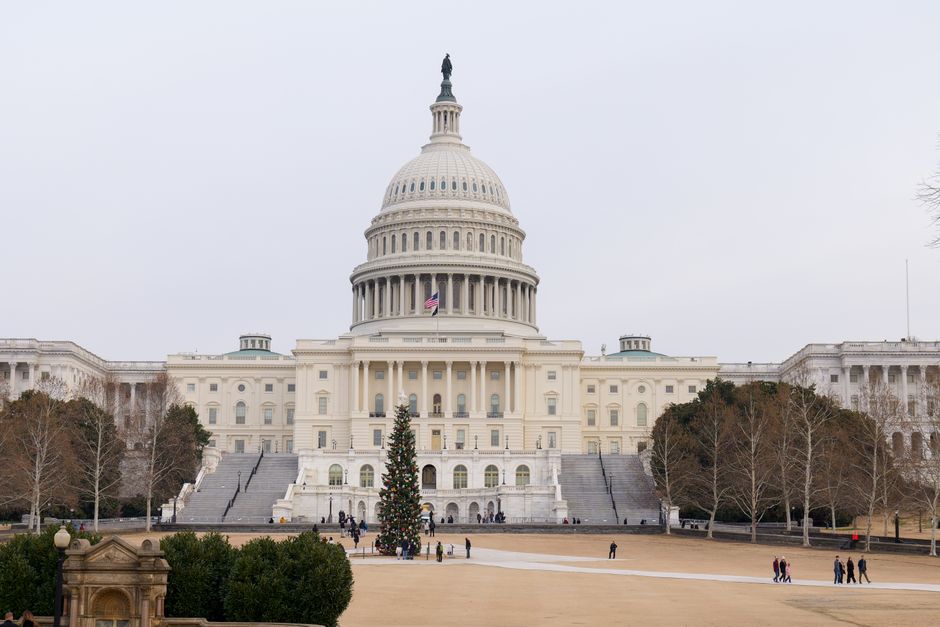
Thousands of digitized documents held by the DC Office of Public Records contain duplicate images — the same scanned page appearing in place of a different one — a problem that archivists and civic technologists say has compounded quietly for years and is now forcing a reckoning with how the city stores, tags, and publishes its official record.
The issue matters acutely right now. With federal workforce restructuring under the Trump administration putting new pressure on municipal governments to demonstrate independent administrative competence, and with Mayor Muriel Bowser's office navigating a fraught funding environment shaped by DOGE-era efficiency mandates, the credibility of DC's own document infrastructure is under scrutiny it hasn't faced in years. Researchers at Martin Luther King Jr. Memorial Library on G Street NW began flagging the problem formally in early 2025, when reference staff noticed that land-use filings from Anacostia and NoMa were returning image results that didn't match their metadata labels.
The duplicate image problem — technically called an image-replacement error in archival science — occurs when a digitization batch misassigns a scanned file to the wrong document record. One image, often a cover sheet or a blank page, overwrites or substitutes for a distinct page that should appear in a separate file. In a physical archive, a misfiled paper can be found and pulled. In a relational database, the wrong image propagates every time the record is called up, and every downstream copy inherits the error.
The Office of Public Records began its large-scale digitization push around 2018, contracting out batch scanning of deed books, zoning decisions, and council hearing transcripts. The volume was significant: city officials at the time cited a backlog stretching back to records from the 1970s. Batch scanning at that scale, using optical character recognition to auto-populate metadata fields, creates the conditions for systematic misassignment. A single misconfigured delimiter in a file-naming convention can propagate across an entire day's worth of scans before anyone catches it.
The DC Council's Committee on Judiciary and Public Safety received a staff briefing on archival data quality in March 2026. No corrective funding line appeared in the fiscal year 2027 budget proposal that cleared committee in May. The Office of Public Records, operating out of the Wilson Building at 1350 Pennsylvania Avenue NW, has not published a public audit of its digitized holdings. Requests for a timeline on remediation have not produced a formal public response as of this week.
The practical consequences fall unevenly. Title researchers working on properties in rapidly gentrifying corridors — particularly along the Anacostia waterfront near Barry Farm and in the stretch of NoMa north of Florida Avenue NE — depend on clean chain-of-title documentation. A duplicate image standing in for a missing deed page can stall a closing, trigger a title insurance dispute, or simply send a researcher back to the physical stacks at the National Archives at College Park, a round trip that costs half a workday. Legal aid organizations serving lower-income residents have less capacity to absorb that kind of delay than commercial title companies do.
Fixing the problem systematically means reconciling every digital record against a physical original — a process archivists call a QC audit or image-verification sweep. For a holdings set the size of DC's, that work typically runs between $80 and $120 per linear foot of records when contracted out, based on industry pricing for comparable municipal projects in cities like Baltimore and Philadelphia. The DC archive's digitized backlog represents thousands of linear feet. The cost is real and the timeline, without a dedicated appropriation, is open-ended.
For residents who need specific documents now, the practical path is the same one it was before digitization: request a physical pull through the Office of Public Records reading room, allow three to five business days, and verify any scanned image against the paper original before relying on it in a legal or financial proceeding. The Martin Luther King Jr. Memorial Library reference desk can also assist with navigation to federal repositories when DC records prove incomplete. The digital promise was faster, cheaper access. For now, the paper copy remains the record that holds.
How does this story make you feel?
Spread the word
About this article
Published by The Daily Washington DC
Daily brief
Free, in your inbox before 7am. Weekdays.
More in News