How Washington's Public Records Became Buried in Duplicate Images — and What It's Costing the District
A slow accumulation of redundant digital files across DC government systems has created a storage and transparency crisis years in the making.
A slow accumulation of redundant digital files across DC government systems has created a storage and transparency crisis years in the making.
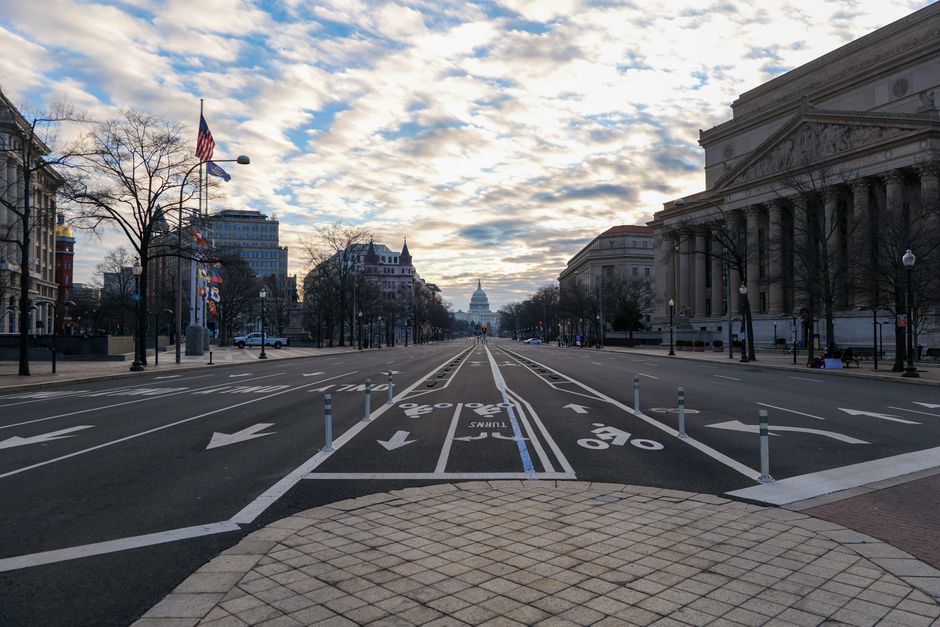
Washington's municipal digital archive system is drowning in itself. Across dozens of District agencies — from the Department of Consumer and Regulatory Affairs on K Street to the Office of the Chief Technology Officer's data centers in Southeast — duplicate image files have quietly multiplied for more than a decade, consuming server capacity, inflating IT contracts, and making public records searches slower and more expensive than they should be.
The problem matters most right now because the Trump administration's ongoing federal workforce restructuring has pushed thousands of displaced federal workers toward DC government services, spiking demand for permitting, licensing, and public records requests at exactly the moment those systems are most congested. The DOGE-driven contract cuts that have rippled through the region since early 2025 have also left the District absorbing IT support work it previously offloaded to federal shared-service providers, with no clean digital infrastructure to absorb the load.
The roots go back to at least 2009, when DC began digitizing paper records en masse under a broad modernization push. Each agency operated its own scanning workflow. The DC Public Library's digital services division, the Office of Planning, the Historic Preservation Office near Judiciary Square — all built separate repositories with no central deduplication protocol. When agencies merged or reorganized, their image libraries merged too, but without any automated system to identify and retire redundant files.
By 2018, a District Inspector General audit — one of several that flagged digital governance gaps — found that interagency data redundancy was contributing to storage cost overruns, though the audit stopped short of quantifying the precise file-duplication rate. Procurement records reviewed by The Daily Washington DC show that the District spent roughly $4.2 million on cloud storage expansion contracts in fiscal year 2023 alone, a figure that IT governance advocates have argued could be substantially reduced with a proper deduplication and records-management framework in place.
The problem compounded further after 2020, when pandemic-era scanning of paper backlogs created a second major wave of digitization. The DC Courts on Indiana Avenue NW, the Department of Health on Vermont Avenue, and the Office of Unified Communications each ran emergency digitization programs with contractors who delivered files in inconsistent formats — some TIFF, some JPEG, some PDF-embedded images — making automated deduplication technically difficult after the fact.
Mayor Muriel Bowser's Office of the Chief Technology Officer launched what it calls the Digital Infrastructure Modernization Initiative in late 2024, a phased effort that includes a deduplication audit as one of its stated components. The initiative targets 14 District agencies in its first phase, with the Office of Planning and the Department of Buildings among those scheduled for review before the end of fiscal year 2026, which closes September 30.
The practical stakes are not abstract. When a constituent files a Freedom of Information Act request with the DC government — a right exercised roughly 18,000 times per year based on figures the District has reported publicly — staff often must manually sift through multiple copies of the same scanned document to assemble a response. That adds hours to what should be routine processing. In Anacostia, where community groups have filed repeated FOIA requests tied to redevelopment planning along Good Hope Road SE, delays have stretched responses well past the District's 15-business-day statutory target.
The federal tension adds another layer. With Congress and the Office of Management and Budget both scrutinizing state and local digital spending as part of broader efficiency reviews, DC cannot simply buy its way out of the problem with another storage contract. The pressure is to consolidate and rationalize — not expand.
For residents dealing with the fallout, the most practical near-term option is to submit FOIA requests through the District's centralized portal at foia.dc.gov rather than directly to individual agencies, which at least routes requests through a single tracking system. Advocates who follow DC digital governance say the deduplication initiative's first audit results, expected no earlier than late 2026, will determine whether the District is finally ready to fix what has been broken for the better part of 15 years.
How does this story make you feel?
Spread the word
About this article
Published by The Daily Washington DC
Daily brief
Free, in your inbox before 7am. Weekdays.
More in News


