Bethesda's Quiet Evolution: Where DC's Blue-Chip Suburb Still Delivers Value
As Georgetown and Capitol Hill command premium prices, smart buyers are finding quality-of-life investments in Maryland's most established suburb.
As Georgetown and Capitol Hill command premium prices, smart buyers are finding quality-of-life investments in Maryland's most established suburb.
Bethesda has always been the sensible choice—the kind of neighborhood where professionals raise families, where Metro access meets tree-lined streets, where the median home price hovers around $850,000. But sensible doesn't mean boring, and it certainly doesn't mean overpriced anymore.
While Capitol Hill brownstones and Georgetown rowhouses routinely breach the $1.2 million threshold, Bethesda offers something increasingly rare in the DC corridor: established infrastructure, proven schools, and genuine walkability at a measurable discount. For buyers willing to look past the flashier neighborhoods dominating real estate Instagram, this matters.
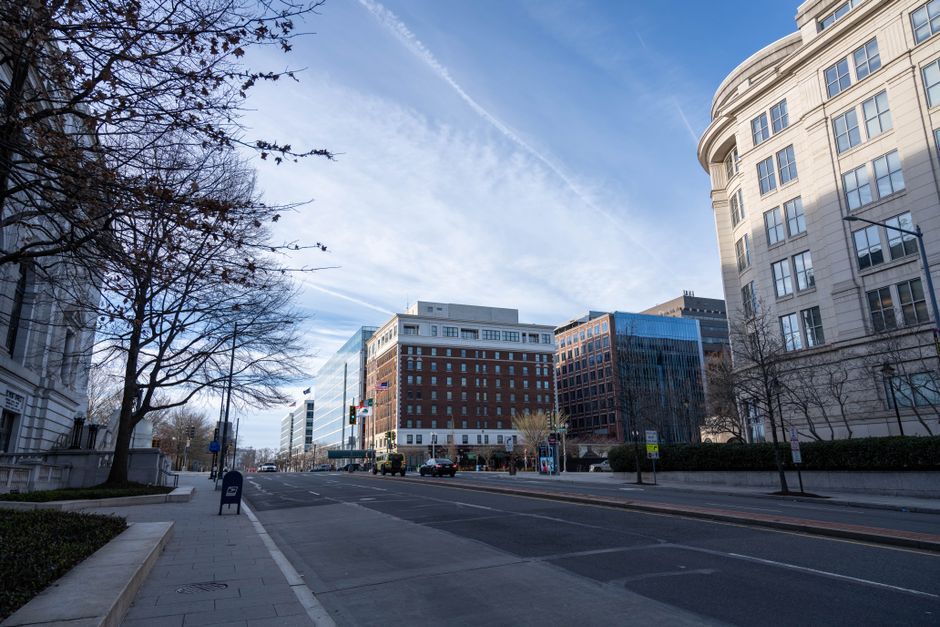
The transformation along Bethesda Avenue tells the story. The revitalized downtown core—anchored by the Bethesda Row mixed-use development and the incoming Purple Line Metro extension (opening 2026)—has attracted young professionals without the accompanying price explosion seen elsewhere. New restaurants, galleries, and office space have materialized, yet median prices remain roughly 15-20 percent below comparable Georgetown properties.
The numbers reflect this positioning. A three-bedroom Colonial on Westwood Avenue in the Westmoreland Hills neighborhood might list for $925,000—spacious, well-maintained, with access to some of Maryland's top-rated public schools. Similar square footage in Georgetown commands $1.3 million. Navy Yard's gentrification has driven prices upward, but Bethesda's residential character has insulated it from the most aggressive appreciation.
This stability isn't accidental. Bethesda's established commercial base—headquarters for tech firms, consulting groups, and healthcare organizations—provides employment diversification that H Street and other emerging neighborhoods lack. The Bethesda Urban Partnership, a nonprofit development organization, has quietly stewarded investments that feel organic rather than speculative.
The Bethesda Farmer's Market (Saturday mornings at Arlington Road) and the abundance of independent retailers along Woodmont Avenue reveal a community invested in local economics. Proximity to Rock Creek Park offers recreational amenities rival any DC neighborhood, while the Bethesda Arts Center hosts legitimate cultural programming.
For investors watching DC's market cycle—rates stabilizing, regulation tightening around short-term rentals in premium zones—Bethesda presents a counterintuitive play: blue-chip stability without the blue-chip markup. The Purple Line completion will only strengthen fundamentals, while current prices suggest the neighborhood hasn't fully priced in that infrastructure benefit.
In a region where median home prices hit $700,000, finding genuine value requires looking beyond the headlines. Bethesda has never been trendy. That might be precisely why it remains smart.
This article was compiled by AI from the sources linked above and screened before publishing. See our editorial standards.
How does this story make you feel?
Spread the word
About this article
Published by The Daily Washington DC
Daily brief
Free, in your inbox before 7am. Weekdays.
More in Property