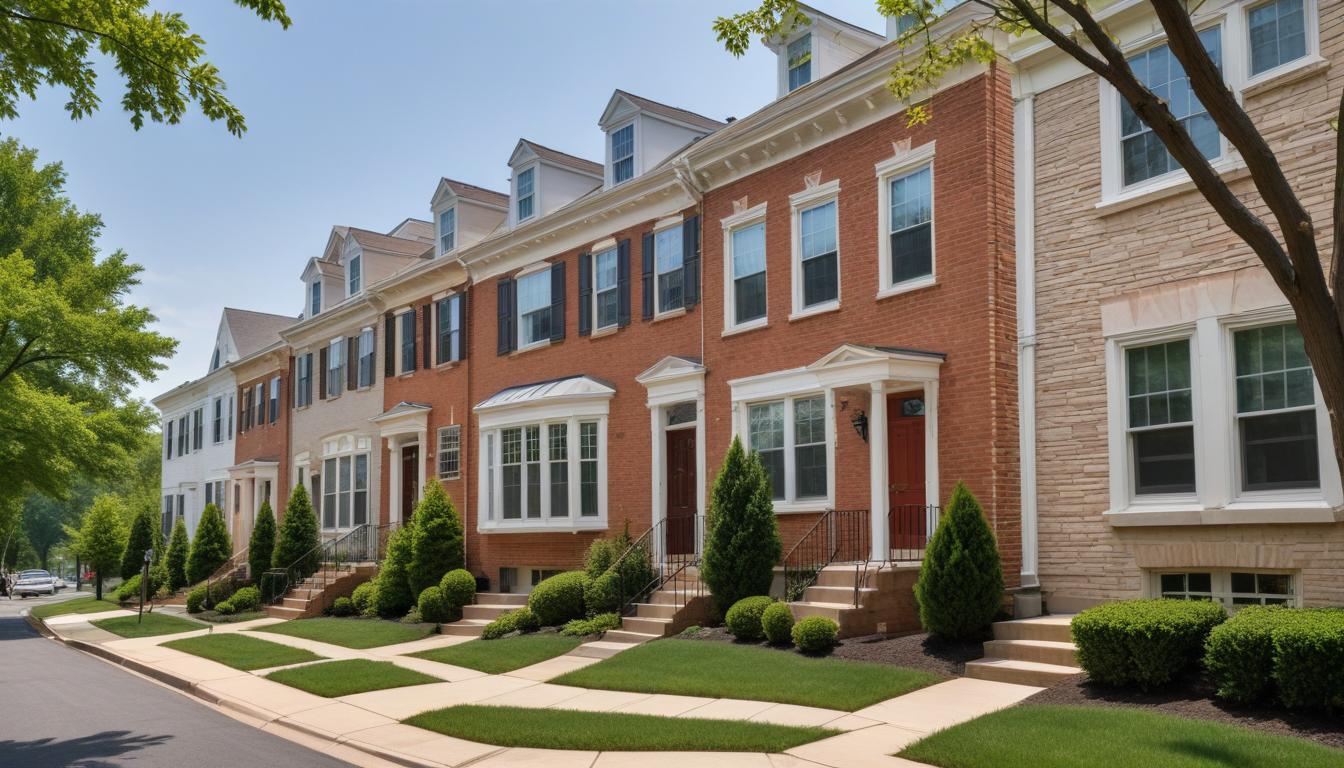
Washington DC's luxury property market is sending mixed signals, and those paying attention to auction results and closed transactions are seeing a narrative far more nuanced than headline prices suggest.
The DC median of $700,000 masks a widening bifurcation in prestige neighborhoods. Georgetown, long synonymous with seven-figure townhouses and waterfront estates, has absorbed three consecutive quarters of modest price adjustments—not crashes, but deliberate recalibration. Recent auction activity shows properties on Prospect Street and N Street sitting longer on the block, with final hammer prices trailing pre-listing expectations by 4–7 percent. This contrasts sharply with data from 2024, when comparable properties moved in 23 days or fewer.
Capitol Hill tells a different story. Properties along Independence Avenue and near the Capitol grounds remain competitive, though the premium has stabilized rather than accelerated. Auction houses report that buyers are now scrutinizing condition and provenance with greater rigor, suggesting the frothy bidding wars of 2023–2024 have given way to more disciplined valuation.
The real signal, however, comes from where money is actually flowing: H Street and Navy Yard corridors are capturing institutional capital. Recent portfolio acquisitions by foreign investment groups and domestic REITs show developers and equity firms are betting on transformation corridors rather than established prestige zones. Comparable properties in these emerging neighborhoods command appreciation trajectories that outpace traditional luxury clusters—a sharp reversal from historical patterns.
Northern Virginia's competitive outer markets—Arlington, Alexandria waterfront, and Reston—are also absorbing overflow from DC proper. Auction data suggests buyers priced out of Capitol Hill are finding better relative value just across the Potomac, where $1.2 million now secures properties that would cost $1.5 million or more in comparable DC locations.
What do these signals mean? First, prestige in DC is becoming less about neighborhood pedigree and more about future fundamentals—proximity to transit, development pipeline, and amenity trajectory. Second, foreign and institutional investors are rotating away from traditional blue-chip addresses toward diversified portfolios spanning emerging corridors. Third, the days of automatic appreciation in Georgetown and comparable zones may be cooling, at least temporarily.
For sellers in established luxury markets, the message is clear: pricing discipline and property condition now matter more than they did 18 months ago. For buyers, the window to secure value in established neighborhoods may be narrowing, but strategic entry into emerging zones is signalling genuine long-term opportunity. The auction results don't lie—they're simply pointing to where DC's next chapter is being written.
This article was compiled by AI from the sources linked above and screened before publishing. See our editorial standards.