The average American now picks up their smartphone 144 times a day, according to a 2025 survey by Reviews.org — roughly once every six and a half minutes during waking hours. In a city like Washington DC, where policy deadlines, news cycles, and lobbying calendars run around the clock, that number almost certainly skews higher. Stress management specialists at MedStar Georgetown University Hospital have noted a steady uptick in patients reporting anxiety, disrupted sleep, and difficulty concentrating — symptoms frequently tied to chronic digital overstimulation.
The timing matters. Heading into the July Fourth holiday weekend, many DC residents are already contemplating a rare pause from the grind. Mental health professionals say that long weekends represent a genuine inflection point — not just a chance to rest, but an opportunity to reset the habits that make rest impossible in the first place. Researchers at the National Institutes of Health campus in Bethesda have published work showing that even short breaks from social media — as few as seven consecutive days — produced measurable reductions in anxiety and depression scores among adult participants. The challenge has never been awareness. It's architecture: designing phone-free blocks that survive contact with real life.
Making It Local, Making It Stick
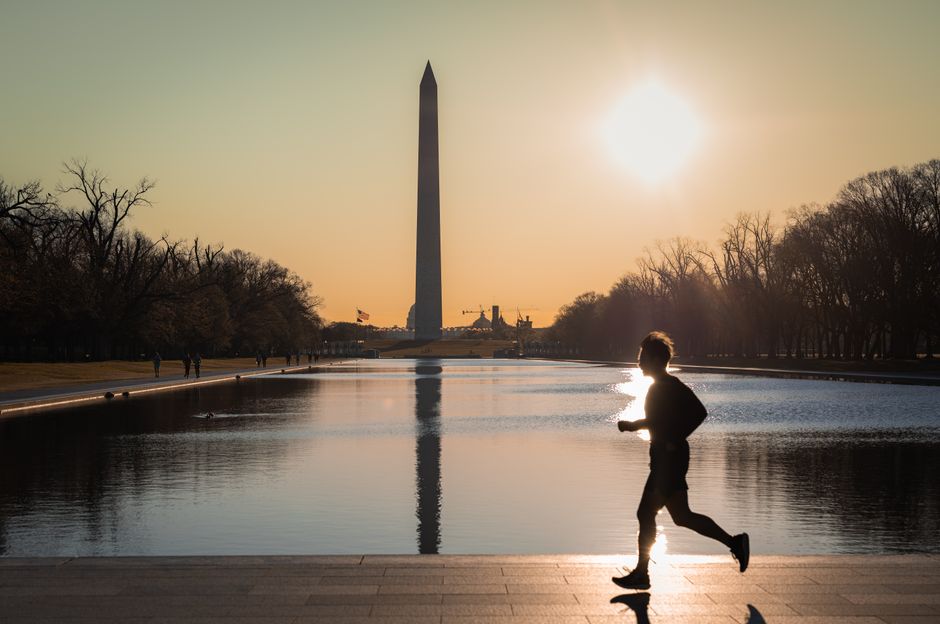
The good news for DC residents is that the city is unusually well-equipped for screen-free living. Rock Creek Park offers more than 32 miles of trails, and the stretch along Beach Drive between Military Road and Broad Branch Road is closed to vehicle traffic on weekends, giving runners, cyclists, and walkers a car-free corridor where checking a phone feels genuinely antisocial. Capital Bikeshare, with over 700 stations across the District, Maryland, and Virginia, offers a practical alternative to the doom-scroll commute — it's difficult to ride a bicycle and refresh your inbox simultaneously. The Mall's outdoor running culture, particularly around the Lincoln Memorial Reflecting Pool, has long functioned as an informal phone-free zone, enforced by nothing more than collective habit and the inconvenience of sweating on a touchscreen.
Organizations like the DC Mindfulness Community, which runs drop-in sessions at locations including the Foundry United Methodist Church on 16th Street NW, explicitly ask participants to silence and pocket devices for the duration of their Thursday evening gatherings. The practice is simple; the effect, regulars report, is cumulative. Starting with one 90-minute block feels manageable. Building toward a consistent morning window — say, 6 a.m. to 8 a.m. — produces the kind of focused morning that compounds across a week.
The Mechanics of a Detox That Doesn't Collapse by Tuesday
Behavioral researchers recommend treating phone-free hours the way you'd treat any appointment: block them on a calendar, tell the people who depend on you, and set an auto-reply. Vague intentions fail. Scheduled commitments don't. The distinction matters because the brain treats an open-ended intention to "use the phone less" as optional, while a fixed block — 8 p.m. to 7 a.m., phone in a drawer — registers as a constraint, not a negotiation.
One practical framework gaining traction involves three structured windows: a morning buffer of at least 30 minutes before opening any app, a midday walk without the device — the stretch along Pennsylvania Avenue NW between Georgetown and Capitol Hill is ideal — and a hard cutoff roughly 90 minutes before bed. Sleep researchers tie this to melatonin suppression: blue light from screens delays melatonin onset by up to 90 minutes, pushing sleep later and reducing overall duration.
Cost is essentially zero. No app subscription, no gym membership, no wearable required. The DC Public Library system, including the central Martin Luther King Jr. Memorial Library on G Street NW, offers free access to physical books, quiet reading rooms, and — critically — no expectation that you'll be reachable while you're there.
Start this weekend. Pick one window, protect it, and see what the city actually looks like when you're not looking at it through a four-inch screen. Consult a primary care physician or mental health professional if anxiety or sleep disruption is significantly affecting your daily life — the George Washington University Medical Faculty Associates operates walk-in and telehealth options for DC-area residents looking for clinical support.