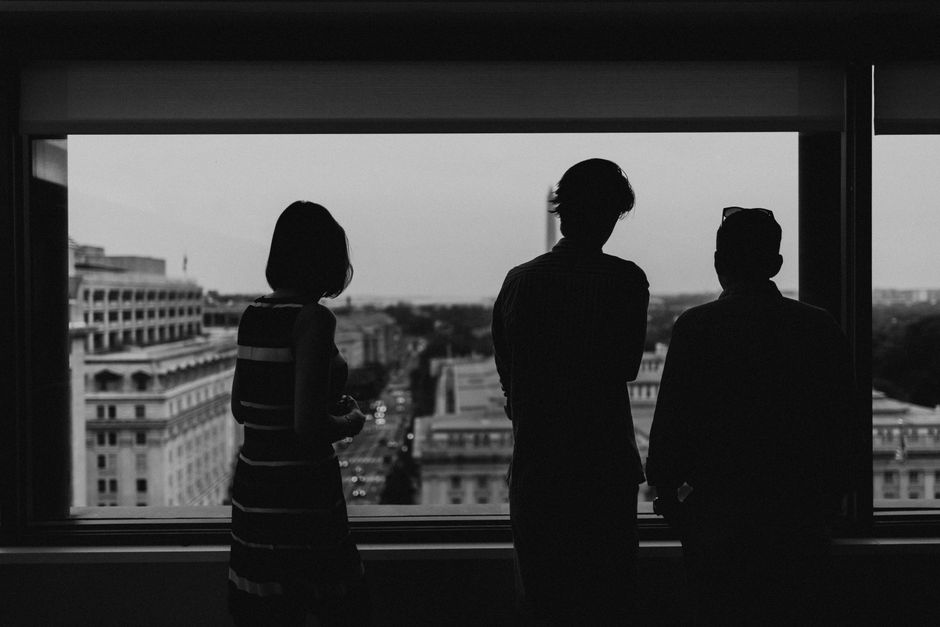
The National Mall remains Washington's postcard. But walk eight blocks north into the U Street Corridor this weekend, and you'll find what the District's cultural life actually became.
That evolution matters now because summer in D.C. forces a reckoning between two competing visions of how this city spends its time. The tourist infrastructure—monuments, Smithsonians, the predictable circuit—still dominates guidebooks. Yet for the past fifteen years, the real momentum has shifted toward neighborhood cultural institutions, independent galleries, and performance venues that wouldn't survive on federal funding alone. Today, both tracks coexist, and which one you choose says something about what D.C. has become.
Start with the measurable shift. In 2010, the Kennedy Center reported 700,000 annual visitors. By 2024, that number had grown to 1.2 million. But that growth masks a more significant demographic change: the audience composition skewed younger, and crucially, more residents were attending. Meanwhile, smaller venues like the Lincoln Theatre on U Street—which reopened in 2010 after a decade-long restoration—now hosts 1,400-seat crowds for contemporary music acts that previous generations would have caught only in New York or Philadelphia.
"The cultural infrastructure here was always there," said one longtime D.C. arts administrator during a phone call this week. "What changed was that young professionals stopped treating their neighborhoods as places to sleep and started treating them as destinations."
The Neighborhood Revolution
H Street Northeast tells that story visually. The corridor, which spent decades as a commercial zone in decline, now hosts Gallery Planet, a nonprofit artist collective that operates out of a former appliance store on H Street itself. The Gallery Planet model—studio space, monthly open studios, affordable rent—became the template for blocks around it. Within walking distance: the Hirshhorn Museum on the Mall, sure, but also independent bookstores, The Coupe coffee shop on 14th Street, and the Longview Gallery on Benning Road, which focuses specifically on emerging artists from the D.C. metropolitan area.
The Smithsonian remains free admission, which matters. Approximately 4.2 million people visited Smithsonian museums in 2024, according to the Institution's annual report. But D.C. residents increasingly supplement that diet with paid cultural experiences in neighborhoods where admission costs $15 to $25. The Arena Stage in Southwest D.C., which pioneered the regional theater movement in the 1950s, now charges $35 to $85 per ticket and functions as a proving ground for productions that later move to Broadway.
This weekend specifically, the Hirshhorn runs through July while maintaining its permanent collection. The Kennedy Center box office shows three separate venues operating simultaneously. But locals know that Saturday night in Logan Circle or a Friday evening in Anacostia—where the Anacostia Arts Center has operated since 2006—offers something the monuments cannot: the feeling that culture here is still being made, not merely preserved.
The Persistence of the Old System
None of this has displaced what came before. The Smithsonian American History Museum still drew 3.1 million visitors in 2024. The National Gallery remains the city's most-visited art institution. The National Theatre on Pennsylvania Avenue, operating continuously since 1835, still offers free performances in its lobby twice daily.
If you're actually in D.C. today and deciding how to spend the holiday weekend, the architecture of choice remains: the institutional gravity of the National Mall, or the experimental energy of neighborhoods beyond it. Both are genuine. Both have deep roots. The difference is that twenty years ago, the choice felt less balanced. Now it doesn't.