Your Complete Guide to the Best Local Experiences in Washington DC Right Now
Summer heat is peak season for the capital's museums, outdoor concerts, and neighborhood explorations—here's where to spend your July Fourth weekend.
Summer heat is peak season for the capital's museums, outdoor concerts, and neighborhood explorations—here's where to spend your July Fourth weekend.
Washington DC's culture calendar hits maximum velocity in early July, when residents and visitors converge on the National Mall for fireworks, crowd the air-conditioned Smithsonian museums during triple-digit heat waves, and fill neighborhood restaurants and concert venues. The window between now and Labor Day offers the city's most saturated programming calendar, though summer also means planning carefully around crowds and heat.
The timing matters. European cities face extreme weather stress—France recorded over 2,000 excess deaths during recent heatwaves—and global tensions ripple through geopolitical coverage. For DC residents and visitors, that context sharpens the appeal of spending time in America's civic center during a relatively stable domestic moment. The city's culture institutions remain reliably open and free or low-cost, unlike many other major global destinations grappling with infrastructure challenges or travel complications.
Start with the obvious: all 19 Smithsonian museums on the National Mall remain free to enter, though the American History Museum on Constitution Avenue and the National Gallery of Art's East Building on Fourth Street both charge for special exhibitions. The American History collection just rotated summer programming, with expanded hours until 10 p.m. on select Thursday and Friday nights in July. The Natural History Museum, sitting directly across the Mall near Tenth Street, operates standard 10 a.m. to 5:30 p.m. hours but reaches capacity by noon on weekends, so arrive by mid-morning.
Skip the Mall if crowds trigger you. Instead, head to the Hirshhorn Museum's sculpture garden on Independence Avenue, which stays open until dusk and offers free entry plus a genuine escape from the packed museum interiors. The nearby Air and Space Museum's Udvar-Hazy Center location in Chantilly, Virginia, 45 minutes west, draws serious aviation enthusiasts but sees 60 percent fewer visitors than its downtown counterpart.
Neighborhood culture beats predictable tourist corridors. The U Street Corridor in Shaw hosts live jazz and blues most nights at the Bohemian Caverns—a restored 1926 jazz club operating continuously since the bebop era. The 14th Street NW strip in Logan Circle boasts galleries, restaurants, and Thursday evening street festivals featuring local vendors and musicians. Eastern Market, the 19th-century public market stretching along Seventh Street SE in Capitol Hill, functions as working farmers market, food vendor hub, and informal gathering space where DC residents actually spend Saturday mornings.
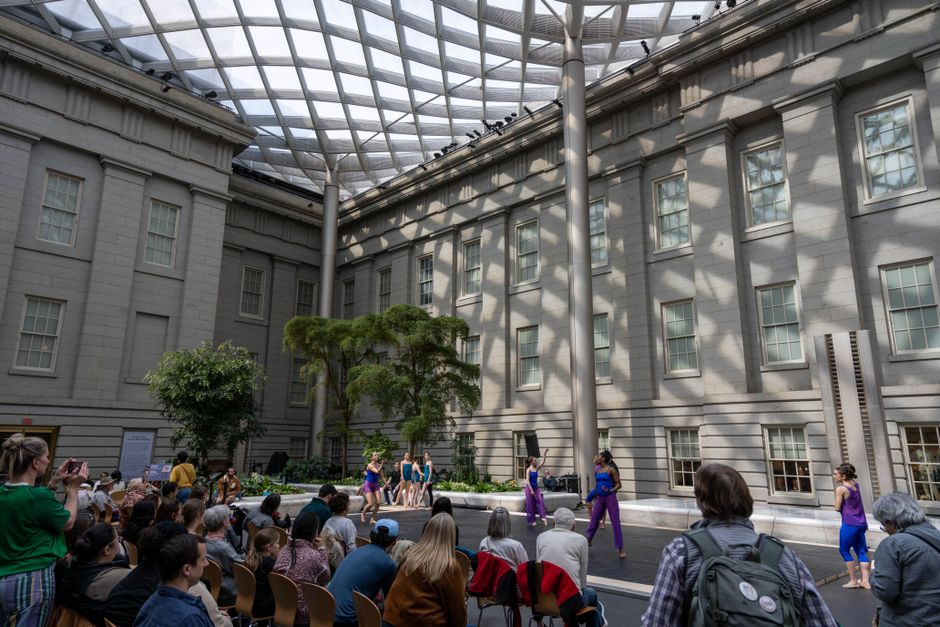
The Kennedy Center opens its Millennium Stage nightly at 6 p.m. for free performances—a 25-year-old program that consistently books world-class musicians, dancers, and theater companies. July programming includes classical ensembles and contemporary dance. Capacity runs about 550 seats in the theater and roughly 2,000 in the lobby standing-room area, which fills by 5:30 p.m. on popular nights. Tickets cost zero dollars.
The Nationals baseball team plays at Nationals Park in Navy Yard-Ballpark through October, with games most evenings starting at 7:05 p.m. Bleacher seats start around $18. The stadium's location near the Anacostia River puts you within walking distance of Navy Yard bars and restaurants, making game days into neighborhood events rather than isolated sporting moments.
Theater runs year-round at Arena Stage in Southwest DC and Shakespeare Theatre Company downtown, though summer brings outdoor Shakespeare productions at venues including the Carter Barron Amphitheatre near Rock Creek Park in Northwest. Shakespeare Theatre performs free performances there through August. Book ahead—the 3,750-seat amphitheater fills reliably by showtime.
Heat management becomes tactical. Visit outdoor destinations before 11 a.m. or after 6 p.m. when temperatures drop below 90 degrees. The Tidal Basin walking loop around the Jefferson and FDR memorials offers shade breaks and water vistas. Rock Creek Park extends 1,754 acres through the city's center with hiking trails, stream access, and picnic areas largely shaded by old-growth forest.
Plan your evening meal around neighborhood walks. Dupont Circle offers sidewalk dining and bookstores. Georgetown's M Street bustles nightly. The H Street NE Corridor in Northeast DC has emerged as a serious restaurant and nightlife district over the past five years, with options ranging from taquerias to Michelin-recognized dining.
Book reservations now if eating sits high on your list. Summer months compress dining availability, particularly in walkable neighborhoods where tourists and residents compete for tables. Most neighborhood spots ask for advance bookings on weekend evenings through August.
How does this story make you feel?
Spread the word
About this article
Published by The Daily Washington DC
Daily brief
Free, in your inbox before 7am. Weekdays.
More in culture