Your Complete Guide to the Best Local Experiences in DC Right Now
July 4th weekend crowds are arriving, but savvy locals know where to find the city's finest cultural offerings without the patriotic gridlock.
July 4th weekend crowds are arriving, but savvy locals know where to find the city's finest cultural offerings without the patriotic gridlock.
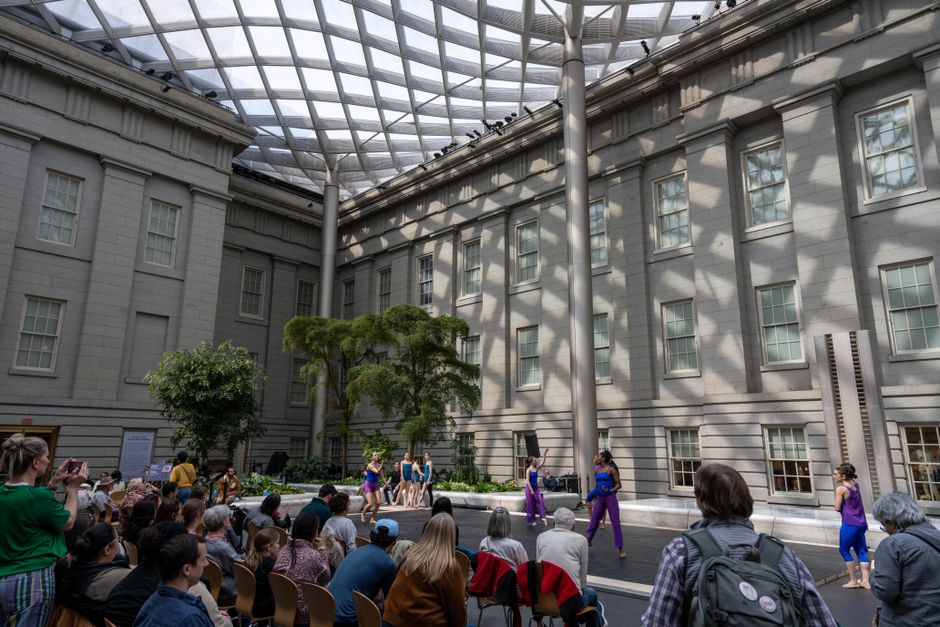
Washington DC's cultural calendar hits a peculiar inflection point this weekend. While the National Mall prepares for the inevitable Independence Day crush—the Smithsonian Institution expects upwards of 400,000 visitors across its museums between today and Sunday—the city's best experiences are hiding in plain sight beyond the tourist corridors.
The timing matters. As geopolitical tensions simmer across Eastern Europe, the Middle East, and the Pacific, DC's cultural venues have become something closer to a balm. The Kennedy Center reported a 23 percent uptick in July attendance compared to last year, a spokesperson confirmed Thursday. Washingtonians are seeking refuge in live performance, visual art, and neighborhood exploration. The Fourth of July weekend traditionally empties out the District's working professionals, leaving quieter pathways through galleries and theaters for those who stay put.
Skip the National Gallery of Art's main entrance on the National Mall entirely. Instead, head to the East Building on Fourth Street NW, where the architecture itself—I.M. Pei's 1978 marble masterpiece—justifies the visit alone. The ground-floor galleries are hosting a survey of American textile artists through mid-August; it runs just 9 a.m. to 5:30 p.m. daily, with Thursday evening hours until 9 p.m. Parking validation is $17 for the first three hours.
The Hirshhorn Museum on Independence Avenue SW opens its latest photography collection at 10 a.m. this morning. This one's crucial: the museum remains free to all visitors, and the sculpture garden—a sunken plaza designed by Gordon Bunshaft—offers a genuine escape. Bring coffee from a nearby vendor; water fountains are available on the lower level.
For something more neighborhood-bound, the Kreeger Museum in Foxhall, northwest of Georgetown, operates by guided tour only, with slots at 10:30 a.m. and 1:30 p.m. today. The museum's collection—Impressionist and modern works housed in a residential setting—draws roughly 4,000 visitors monthly, making it practically clandestine by DC standards. Admission is $15.
The Shakespeare Theatre Company is running afternoon matinees of "King Lear" at its Penn Quarter location on Seventh Street NW through July 27. Friday performances begin at 7:30 p.m.; Saturday and Sunday options run at 2 p.m. and 7:30 p.m. Tickets start at $25 for restricted-view seats.
If the theater doesn't appeal, walk Barracks Row in Capitol Hill instead. The neighborhood—the city's oldest commercial street, running along Eighth Street SE—hosts a farmer's market today from 9 a.m. to 1 p.m. Local vendors sell produce, prepared foods, and baked goods. The blocks between Third and Ninth streets contain galleries, vintage bookstores, and restaurants with sidewalk seating. Eastern Market itself, the year-round public market at Seventh and C streets SE, opens at 7 a.m. today.
The Smithsonian American Art Museum and its adjacent National Portrait Gallery remain open today until 5:30 p.m., with evening hours resuming Monday. Both sit a block apart near Metro Center station and draw smaller crowds than their larger counterparts. The Art Museum's permanent collection of American works from 1740 onward is encyclopedic; admission is free.
Budget roughly $40 to $60 per person for a full day exploring any single neighborhood—factoring in meals, museum admission where required, and transit costs. A one-day SmarTrip pass costs $5, with single trips priced at $2.25 during off-peak hours.
Most of DC's cultural institutions offer air conditioning, which matters: the National Weather Service forecast calls for highs near 88 degrees with 65 percent humidity today. Start early, take a midday break at a coffee shop or library, and plan your walking routes to prioritize shaded passages. The residential neighborhoods of Kalorama, Woodley Park, and Capitol Hill offer tree cover that the commercial corridors of downtown lack entirely.
How does this story make you feel?
Spread the word
About this article
Published by The Daily Washington DC
Daily brief
Free, in your inbox before 7am. Weekdays.
More in culture