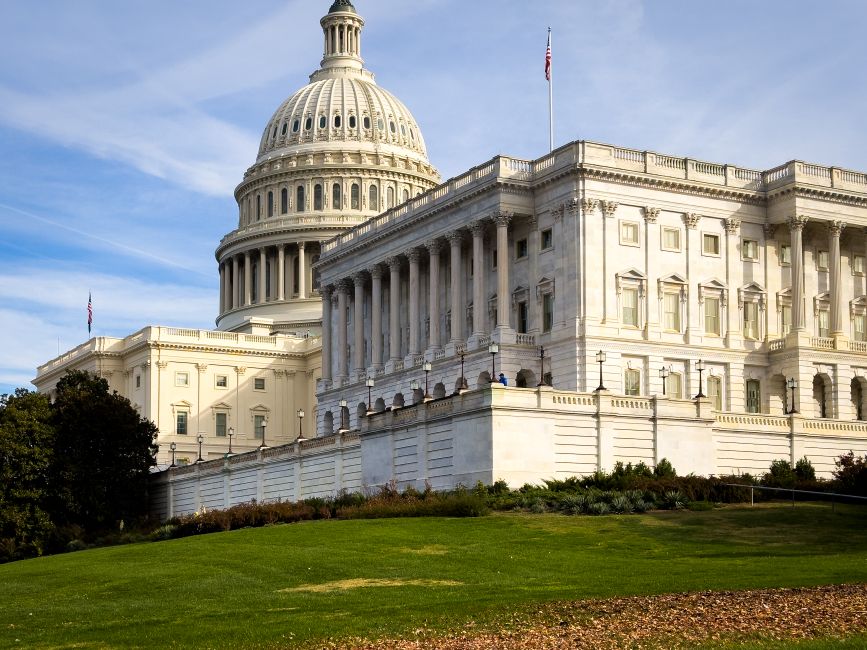
A bipartisan group of senators and representatives introduced sweeping grid modernization legislation Thursday on Capitol Hill, signaling an unusual moment of consensus on infrastructure as extreme heat forced the cancellation of Fourth of July festivities across Washington and the broader region.
The Energy Resilience Act, unveiled at a press conference near the Cannon House Office Building on Independence Avenue, aims to invest $47 billion in electrical grid upgrades and water management systems over the next decade. Sponsors from both parties cited this week's brutal temperatures—which peaked at 104 degrees Fahrenheit in the District on Wednesday—as evidence that the nation's aging infrastructure cannot handle climate stress without immediate intervention.
The timing reflects genuine urgency. Federal workers throughout the District faced disrupted schedules as multiple agencies issued heat alerts. The National Mall, typically packed with tourists on the Fourth, saw sparse crowds due to health warnings. The Kennedy Center canceled outdoor programming. More significantly, the National Weather Service issued excessive heat warnings that affected emergency response planning at D.C. Fire and Emergency Medical Services on 1923 D Street Southeast.
What Lawmakers Are Actually Proposing
The legislation focuses on three concrete objectives: replacing aging transformer equipment in urban electrical systems built before 1985; expanding water storage capacity in drought-vulnerable regions; and establishing a federal matching grant program for municipalities that implement grid hardening projects. Representatives from both chambers claim the bill could move through committee markup by late August, though Capitol Hill veterans remain skeptical about the compressed timeline.
The proposal builds on earlier work by the House Committee on Energy and Commerce, which held hearings on grid vulnerability in May. Staff from that committee say the current infrastructure deficit—estimated at roughly $2.2 trillion across electrical, water, and transportation systems nationwide—cannot be addressed through appropriations alone. The bill would create a new Energy Infrastructure Loan Guarantee Program, modeled on existing lending mechanisms at the Department of Transportation.
Key players include members representing Maryland and Virginia districts who face direct consequences from drought conditions affecting the Potomac River watershed. Maryland's water utility, Washington Suburban Sanitary Commission, reported in April that reservoirs supplying the region stood 12 percent below normal levels. That reality forced practical negotiations that might not occur during less acute circumstances.
The Broader Political Context
The consensus masks deeper divisions. Democrats on the House Transportation and Infrastructure Committee pushed for stronger labor provisions requiring prevailing wages on federal infrastructure contracts. Republicans wanted faster permitting timelines for private utility investment. The compromise language in the introduced version reflects each side's retreat from more contentious positions, with implementation details deferred to agency rule-making.
Success is hardly guaranteed. Similar bipartisan infrastructure initiatives have stalled before in a polarized Congress. Yet staffers on both sides indicate genuine momentum, partly because local impacts from heat events have become impossible to ignore. Water restrictions in the District remain unlikely given the region's relative abundance compared to western states, but the political vulnerability of power outages during extreme weather carries weight with lawmakers from suburban districts.
The legislative calendar works both ways. Sponsors need to move quickly before the August recess, when focus shifts toward campaign season. Committee markup is scheduled for July 16 in both the House and Senate versions. If either version clears committee, floor consideration could begin before lawmakers depart Washington for month-long breaks.
For DC residents and federal employees, the immediate priority remains coping with the present heat wave. The Office of the Mayor has extended cooling center hours at libraries and community centers through next week. But the legislation under discussion suggests that even Washington's fractious political establishment recognizes infrastructure cannot wait for perfect partisan conditions to align.