While Georgetown prices climb past $1.2 million and Capitol Hill commands premium rents, savvy developers are turning their attention to Petworth, a neighbourhood that has quietly emerged as DC's most compelling investment opportunity in 2026.
The northwest quadrant neighbourhood, anchored by Georgia Avenue and bounded by Rock Creek Park to the east, is experiencing a construction surge unseen since the early 2000s. New residential projects have received approval from the DC Department of Housing and Community Development at nearly triple the rate of five years ago, with 47 units approved in the first half of 2026 alone—predominantly mid-rise residential towers targeting the $600k–$850k buyer segment.
The economic logic is straightforward. Petworth's median sale price of approximately $550,000 sits squarely between the outer suburban rings of Northern Virginia (averaging $625k) and the saturated premium neighborhoods closer to downtown. Rental yields average 4.2 percent—substantially higher than Capitol Hill's 2.8 percent—making it attractive to institutional investors and small syndicates alike.
Infrastructure development is accelerating the shift. The planned expansion of the Georgia Avenue corridor, including streetscape improvements and the continued revitalization of the Petworth Metro station area, has prompted major approvals. Two significant mixed-use projects received permits in Q2: a 156-unit residential tower at the corner of Georgia and Lamont, and a 89-unit adaptive reuse conversion of the historic Petworth Market building. Both projects maintain affordability components of 15–20 percent, partly driven by Ward 4 community advocacy.
Local retail is following residential momentum. New Concept Market, a neighbourhood staple on Georgia Avenue, recently underwent a $2.8 million renovation, while emerging dining venues and independent retail continue to cluster around the Metro station and along Upshur Street.
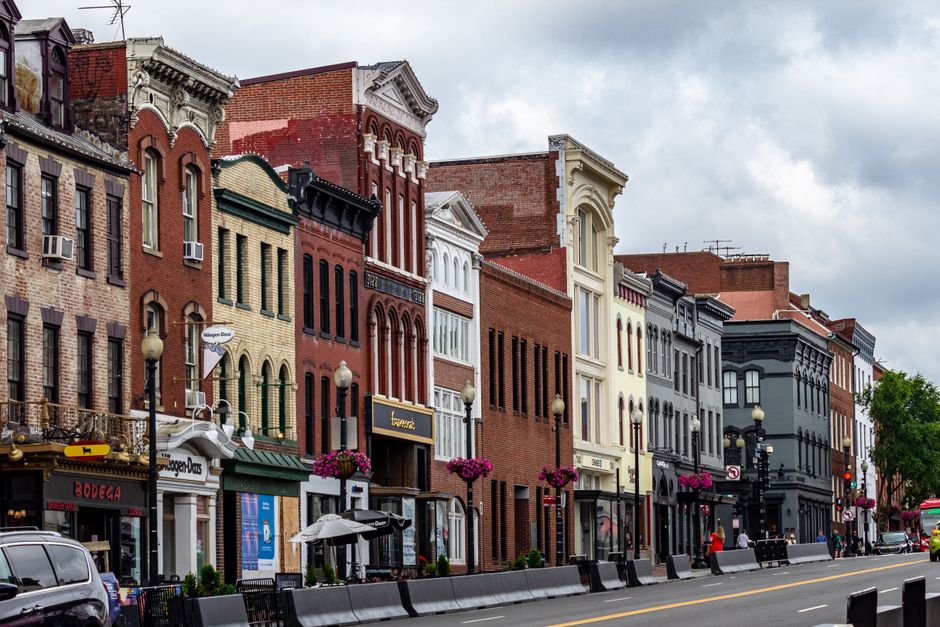
Yet the neighbourhood retains what premium areas have lost: character. Substantial Victorian and early 20th-century housing stock remains, and tree-lined blocks north of Lamont retain residential calm despite rising construction activity. This combination—affordability, walkability, transit access, and architectural integrity—has not gone unnoticed.
Developers report that acquisition costs for vacant or underutilized parcels in Petworth remain 30–40 percent lower than comparable H Street or Navy Yard sites, yet approval timelines have compressed meaningfully. The DC Zoning Commission's streamlined review for moderate-density projects, combined with Ward 4's organized community engagement process, has created unusual predictability.
For investors observing the capital migration northwestward, Petworth represents a rare convergence: strong demographic tailwinds, genuine scarcity of new supply, and regulatory clarity. Whether sustained growth follows depends on whether the neighbourhood's character can absorb rapid development—a test now underway.
This article was compiled by AI from the sources linked above and screened before publishing. See our editorial standards.