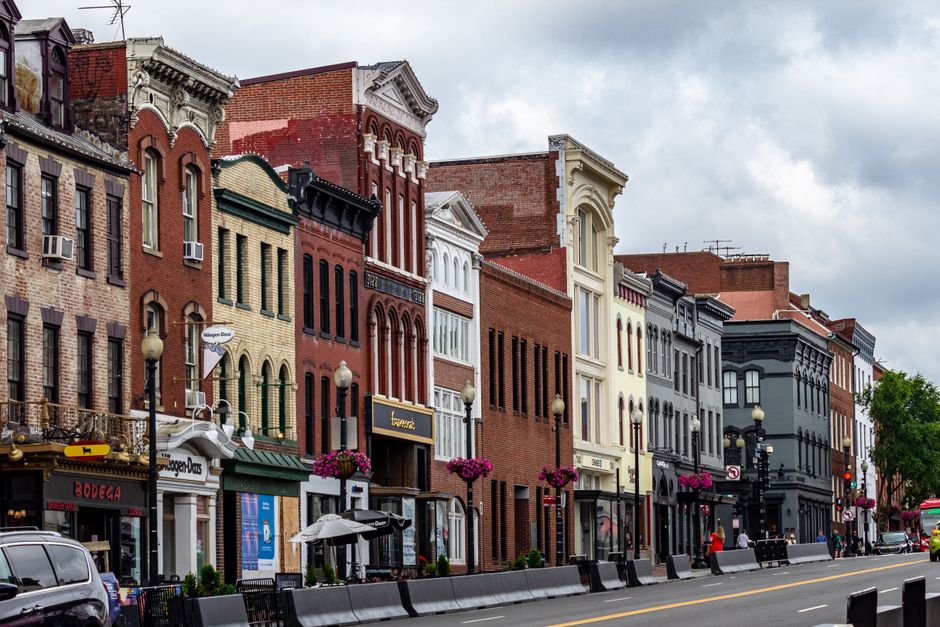
For years, Petworth occupied an awkward middle ground in DC's property hierarchy. Wedged between the gentrified edges of Columbia Heights and the still-stabilizing Georgia Avenue corridor, the neighbourhood felt perpetually on the cusp of transformation. In 2026, that moment has arrived—and first-time buyers with access to federal and local grants are positioning themselves ahead of the curve.
The numbers tell the story. While Capitol Hill's median hovers near $900k and Georgetown remains firmly above $1.2m, Petworth properties are moving at a median of $545k to $580k, depending on proximity to the Metro's Georgia Avenue station. For a first-time buyer eligible for DC's Housing Production Trust Fund programs or federal down-payment assistance grants, that gap represents genuine opportunity.
"The neighbourhood tipping point isn't always visible until it's too late," says the DC Department of Housing and Community Development, which has directed increased grant allocations toward Ward 4 properties this fiscal year. Neighbourhoods like Petworth typically see 18-24 months of advantage before comparable prices inflate. Current inventory along 9th Street NW and around the Petworth Recreation Center remains competitive but not yet squeezed.
Grant structures have evolved meaningfully. DC's Employer-Assisted Housing Program now partners with employers across Metro Center and the Navy Yard corridor to subsidise down payments for qualifying workers—often covering 10-15 percent of purchase price for properties under $650k. Combined with conventional FHA mortgages (requiring just 3.5 percent down), first-time buyers can realistically close with minimal personal capital.
Community infrastructure investments are accelerating the shift. The Georgia Avenue Crossroads initiative has allocated $25m toward retail and streetscape improvements. Bloomingdale—Petworth's historic commercial spine—has attracted new restaurants, a renovated farmers market space, and increased foot traffic. Long-term renters and investors alike recognise the pattern: amenity-led revitalisation precedes price appreciation.
The financing landscape also favours decisive action. Current mortgage rates remain stable, and competition from institutional investors in Petworth hasn't yet reached the intensity seen in neighbouring areas. Local non-profits like the DC Department of Housing continue offering homebuyer counselling and grant-matching services, typically free for first-time purchasers.
For buyers serious about building equity rather than chasing headlines, Petworth represents the last neighbourhood in central DC where federal grants, employer programs, and accessible pricing still align. That window—historically 24-30 months in DC's recent cycles—is narrowing. By 2027 or 2028, Petworth's identity shift will likely be complete, and prices will reflect it accordingly.
This article was compiled by AI from the sources linked above and screened before publishing. See our editorial standards.