New Development Projects Are Reshaping DC's Rental Yields—Here's Where Savvy Investors Should Look
From Navy Yard to H Street, emerging neighborhoods are delivering stronger returns than established premium markets.
From Navy Yard to H Street, emerging neighborhoods are delivering stronger returns than established premium markets.
Washington DC's property investment landscape is undergoing a quiet but significant shift. While Capitol Hill and Georgetown remain prestigious addresses commanding median prices near $900,000, smart investors are increasingly turning their attention to neighborhoods transformed by major development projects—where rental yields are climbing faster than prices.
The transformation along the H Street corridor northeast of Union Station illustrates the pattern perfectly. What was a largely dormant commercial strip five years ago is now anchored by mixed-use developments like the Howard Theatre restoration and adjacent residential projects. Properties in this zone—a five-minute walk from the new Gallaudet University metro entrance—are yielding 4.5 to 5.2 percent annually, substantially above the citywide median of 3.1 percent. For investors willing to hold three to five years, the appreciation potential compounds the income advantage.
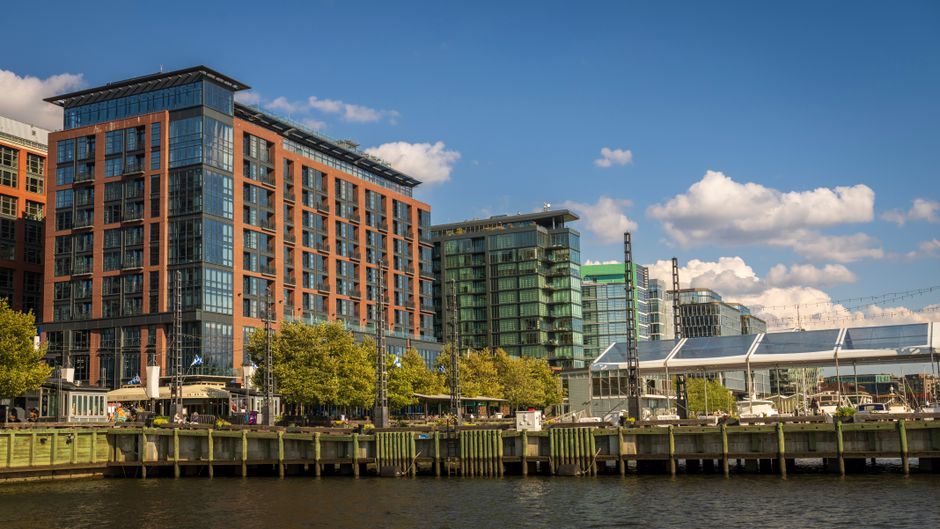
Navy Yard–Ballpark, meanwhile, continues to reward early movers. The neighborhood's development hub around First Street SE has attracted young professionals and families in search of walkability without the Capitol Hill premium. Residential units in post-2020 developments here are achieving 4.8 percent gross yields, with occupancy rates hovering near 96 percent. The anchor tenant—the Washington Nationals—ensures reliable foot traffic and neighborhood amenities that support rental demand.
Northern Virginia suburbs, particularly Arlington and Alexandria, present a different calculation. While median prices push toward $650,000, yields remain compressed at 2.8 to 3.3 percent, reflecting the region's desirability and density constraints. Smart money is treating these markets as long-term appreciation plays rather than income generators.
The District itself offers intermediate opportunities. Emerging projects near the Wharf and along the Anacostia waterfront are beginning to shift investor calculus. New residential buildings with amenity-heavy programming—co-working spaces, fitness facilities, shared kitchens—are commanding rents 12 to 18 percent above older stock, supporting higher yields even as construction costs inflate.
For landlords considering entry points, the calculus is straightforward: development announcements precede neighborhood transformation by 18 to 36 months. Tracking zoning approvals, Metro access improvements, and commercial lease announcements provides early warning of yield expansion. A property purchased during active development—when headlines drive uncertainty and prices stall—often enjoys both rising rents and appreciation once the project opens.
The median DC property remains a solid investment. But the real opportunity, for those willing to research neighborhood trajectories, lies in the neighborhoods about to stop being whispered about and start commanding headlines.
This article was compiled by AI from the sources linked above and screened before publishing. See our editorial standards.
How does this story make you feel?
Spread the word
About this article
Published by The Daily Washington DC
Daily brief
Free, in your inbox before 7am. Weekdays.
More in Property