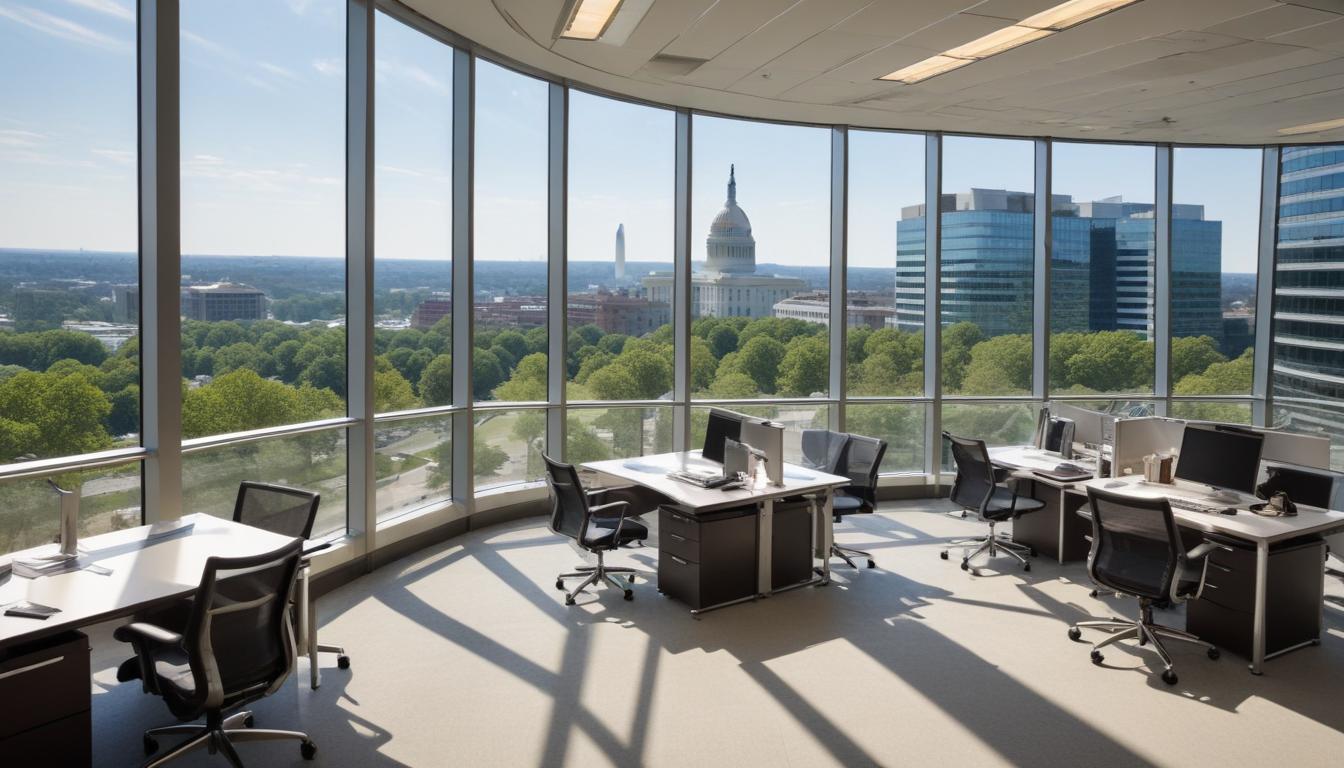
Flexible office space demand in DC has grown 34% since 2024. Explore how coworking entrepreneurs are expanding beyond traditional business districts with solutions for remote workers.
Labor shortages and inflation are reshaping DC dining and retail. Here's how restaurants, prices, and shopping hours are changing in Washington in 2026.
How Middle East tensions and currency shifts are driving up costs for D.C. restaurants, offices, and retailers. What local business owners need to know.
Washington DC's commercial real estate shows stabilizing rents near $45-52/sqft but rising vacancy. Learn what economic indicators matter most for investors navigating K Street and NoMa districts.
Washington DC's import-export community faces shipping cost spikes and tariff uncertainty. Local trade leaders share strategies for adapting supply chains amid geopolitical tensions.
As federal incentives unlock billions for building upgrades, a new class of local contractors is capturing market share—and investors are taking notice.
As delivery-first dining models proliferate across the District, traditional restaurants are struggling to compete for workers—forcing a seismic shift in how the city's food and beverage sector recruits and retains staff.
From Georgetown boutiques to K Street law firms, the Trump administration's trade tensions and geopolitical flashpoints are forcing local companies to rethink supply chains and pricing strategies.
As venture capital flows into the District's innovation corridors, local investors reveal why the economic signals are more complicated than they appear.
As hybrid work reshapes demand and landlords adjust strategies, the capital's commercial real estate landscape is entering a critical phase that will define the next three years.
As international visitor numbers rebound, a homegrown hospitality innovator is proving that boutique, data-driven experiences can outperform mass-market tourism operators.
As rents and home prices surge across the capital, employers are losing talent to cheaper metros while young professionals abandon plans to build careers in Washington.
While median rents in central Washington exceed $2,400, savvy investors and first-time buyers are reshaping economics in overlooked corridors from Brightwood to Woodridge.
As vacancy rates climb and investment dollars shift, commercial real estate metrics are signaling deeper truths about where capital is flowing in 2026.
As consumer spending patterns shift and office occupancy rebounds, savvy hospitality operators are capitalizing on a widening gap in the District's dining landscape.